TechMade Course Helps Students Turn Ideas Into Real-World Products
March 17, 2026
By Tracie Troha
Georgia Tech students are known for solving complex technical problems, but building real-world products requires more than technical skill. It requires collaboration across disciplines, empathy for users, and the ability to take an idea from concept to prototype to production.
That’s the focus of ME 4853/MGT 4803/ID 4850: Product Design and Realization, a TechMade elective course that brings together students from multiple majors to explore how products are designed, tested, and refined in industry environments. The course is built around three pillars: human-centered design, manufacturing and prototyping, and digital engineering through computational modeling and simulation.
“We had to think hard about a class that could be cross listed across multiple schools,” said Carolyn Seepersad, Eugene C. Gwaltney, Jr. School Chair and professor in the George W. Woodruff School of Mechanical Engineering, who taught the pilot course. “Students have to learn how to speak each other’s language and bridge the gap between different backgrounds.”
Launched in Fall 2024, the course was designed to give students opportunities to apply their deep technical knowledge in interdisciplinary teams.
“We wanted students to go through the experience of working with others from different disciplines and understand how those perspectives come together to create a product,” said Amit Jariwala, director of design, innovation, and experiential learning in the Woodruff School, who helped develop the course.
For Jocelyn Hill, a fourth-year mechanical engineering major, the course delivered exactly what she was looking for.
“I wanted hands-on experience designing, building, and showcasing my own projects,” Hill said. “I was looking for a course that goes beyond theory and allowed me to apply engineering concepts in a creative and practical way.”
Hill said the course exceeded her expectations by giving her the opportunity to “turn ideas into real, tangible prototypes.”
Fourth-year mechanical engineering student Nathan Drury had a similar motivation for enrolling in the course.
“I always wanted to get more involved with product design, especially fabrication and optimization,” he said. “The class seemed to be the only option that offered this hands-on style course where we actually get to build a large number of products.”
Hill and Drury took the Fall 2025 Product Design and Realization course taught by Wayne Li, the James L. Oliver Professor of Practice in Design and Engineering in the School of Industrial Design.
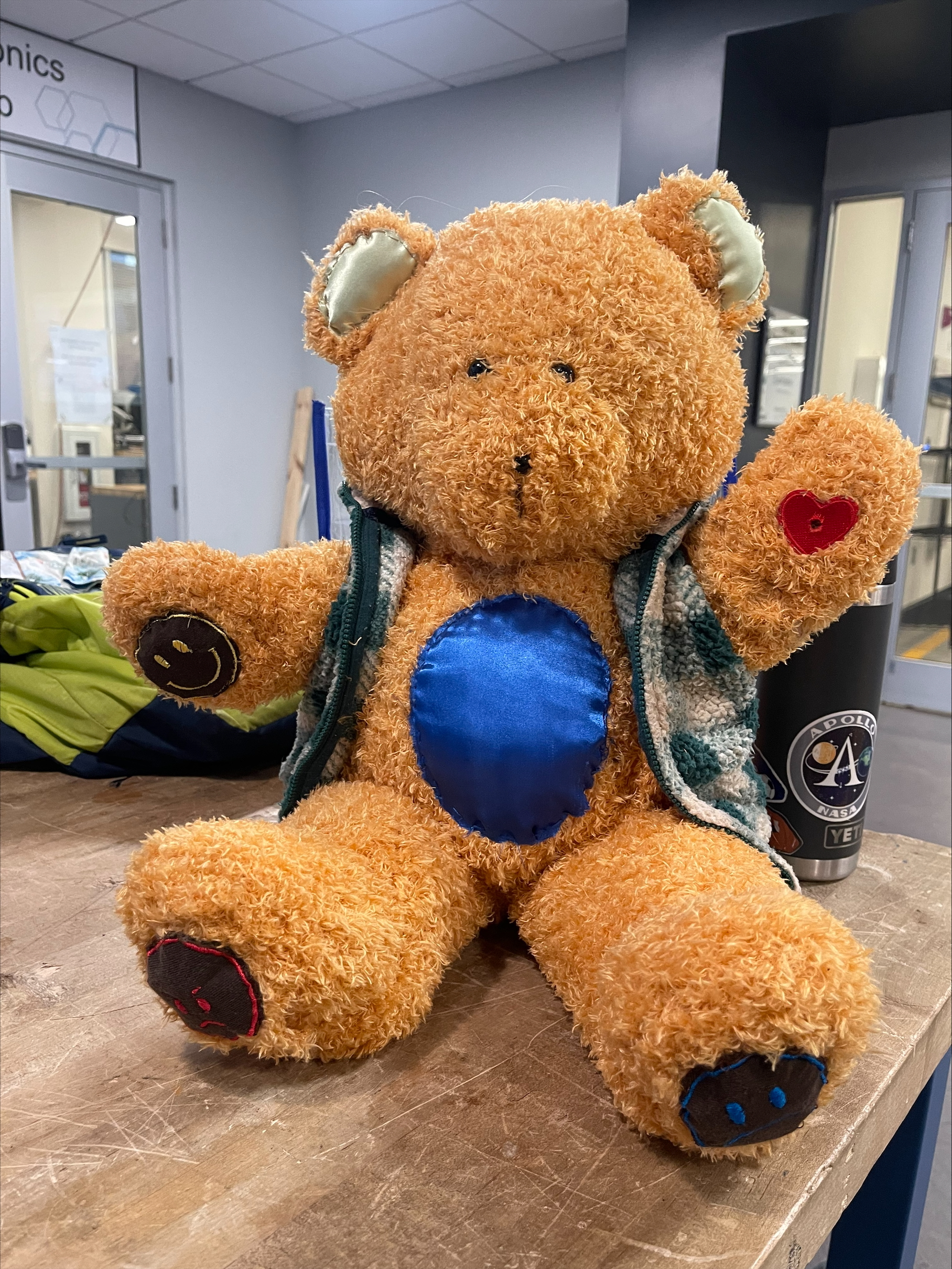
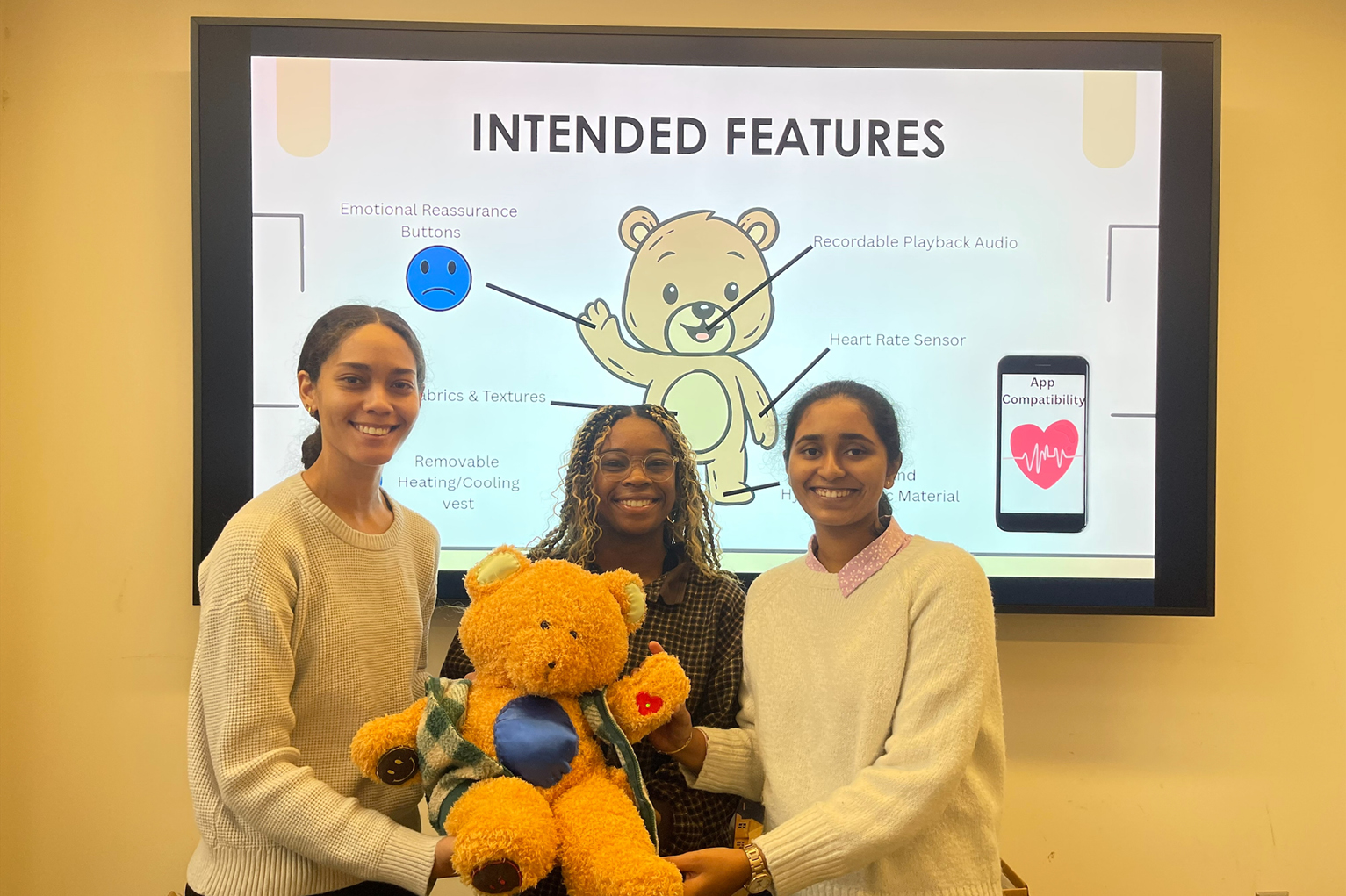
Under Li’s guidance, students completed individual mini-assignments along with a semester-long team project to design a therapeutic toy that provides personalized comfort to children overcoming medical trauma. The team project was based on a Capstone Design project called Comfort Companion sponsored by Design for Planet Impact. Li said this structure helped students “learn by doing” and synthesize their skills with others to “make something greater than the sum of its parts.”
“Another skill I think human-centered design particularly emphasizes is that of empathy and perspective,” Li said. “Students learn how to understand a customer’s requirements without jumping to the wrong conclusions.”
Hill said one of her biggest takeaways was learning how different disciplines contribute to product development.
“Everyone approached problems differently, which broadened my perspective on engineering design,” she said. “It highlighted how important communication is in cross-disciplinary teams and showed how easily miscommunication can occur if roles and expectations aren’t clear.”
Drury also said working with industrial design students expanded his understanding of the design process.
“I learned how intensive their design and fabrication process is, which was definitely inspiring to see,” he said. “I also got to use some of their facilities.”
Lena Moller, a graduate teaching assistant for the course, said the hands-on nature of the class is what makes it stand out.
“The students love the ability to get some hands-on experience with tools, especially while working on a chosen project that interests them,” she said. “For the final project, they really dove deep on physical testing and prototyping.”
The course also emphasizes peer-to-peer learning across majors. Moller recalled seeing students regularly teach one another new skills.
“I remember one mechanical engineering student teaching an industrial design student how to do some basic CAM work on Fusion 360,” she said. “Later they swapped, and the industrial design student was teaching the mechanical engineering student how to draw prototype schematics. Neither of those things were concretely part of our course, but they still dedicated themselves to learning it anyway.”
Faculty hope the course continues to expand across campus through additional cross-listings.
“Other schools don’t have to recreate the wheel. They can partner with us,” Jariwala said.
For students considering the course, Seepersad offered simple advice.
“Keep an open mind,” she said. “It’s a class where you can take some risks and learn new things.”