Natalie Cannon Turns Curiosity Into a Career in Nuclear Innovation
May 7, 2026
By Tracie Troha
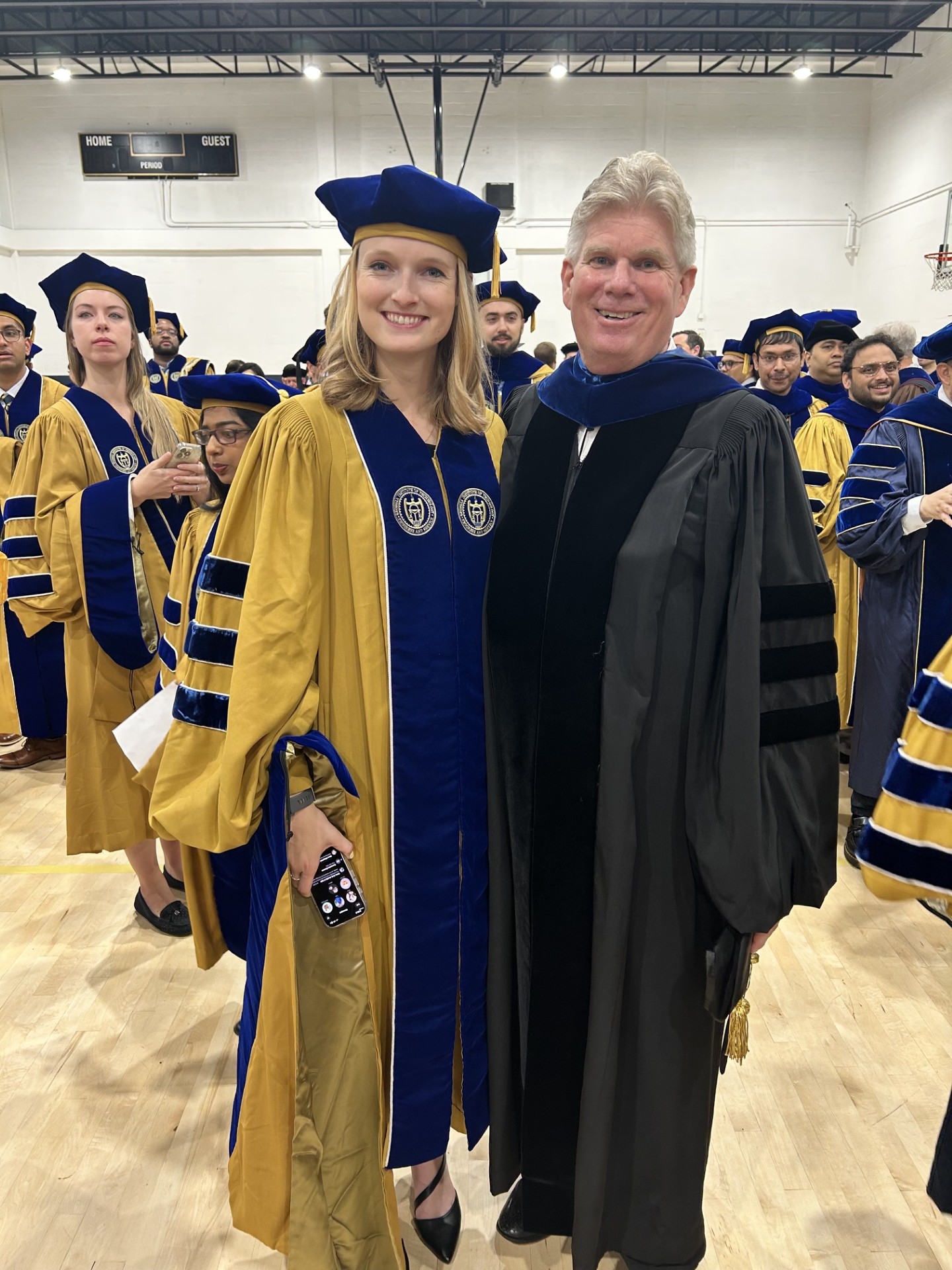
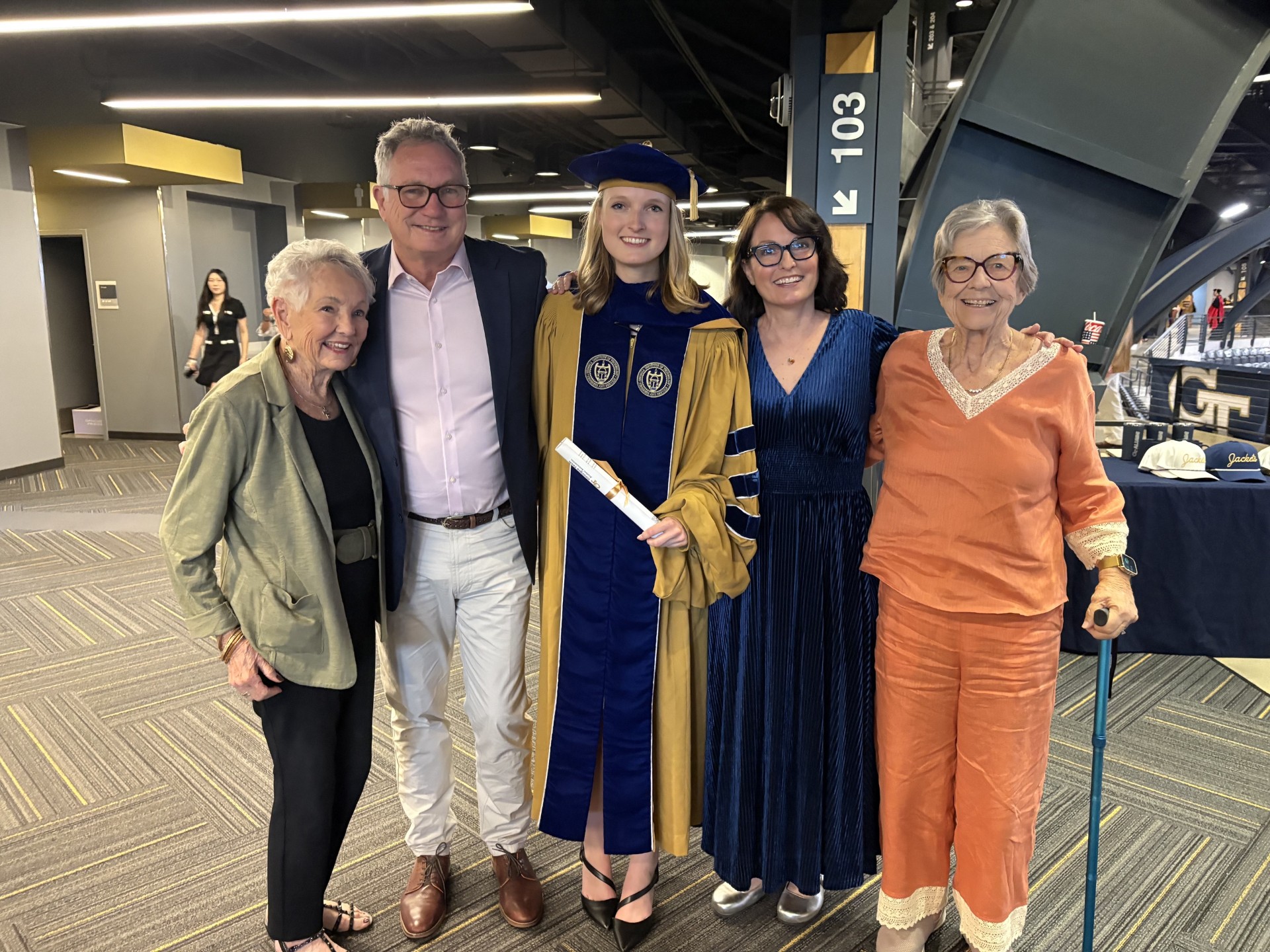
When Natalie Cannon crosses the stage at Georgia Tech’s May commencement ceremony, it will mark the culmination of a journey that began almost by accident and led her to one of the most specialized nuclear engineering roles in the country.
Cannon is graduating with a Ph.D. in nuclear and radiological engineering from the George W. Woodruff School of Mechanical Engineering while working full time as a research and development engineer at Los Alamos National Laboratory. There, she conducts critical nuclear experiments. It’s hands-on work that few engineers ever get to experience.
“I honestly fell into nuclear engineering,” Cannon said of her path to the field.
As an undergraduate, Cannon landed an internship at the Princeton Plasma Physics Laboratory, where she worked on a fusion reactor. The experience sparked her interest in nuclear science and set her on a path toward graduate school. When it came time for graduate school, she split her applications between plasma physics and nuclear engineering, initially expecting to pursue fusion.
Georgia Tech changed that plan.
“Georgia Tech had been my dream school for many years,” Cannon said. “I’m from California, but my dad grew up in Georgia. He told me that all the best scientists and engineers come from Georgia Tech, and that planted a seed that I wanted to be the best. When I got accepted, how could I not come here?”
From the Classroom to Real-World Impact
Once on campus, Cannon shifted her focus to nuclear engineering and never looked back.
Her doctoral research focused on developing a proof-of-concept system that streams data and analyzes a nuclear system to help determine whether it is operating safely or approaching a critical state. The work was designed to support decommissioning efforts at Fukushima Daiichi nuclear plant in Japan.
She hopes its applications will extend far beyond a single site, with potential applications in nuclear emergency response and reactor startup operations.
Hands-On Work at Los Alamos
At Los Alamos, Cannon builds reactors by hand and takes them critical as part of the lab’s Advanced Nuclear Technology Group. It’s work that exists in very few places and combines hands-on science, collaboration, and real-world impact.
“It's the only place in the country, and perhaps one of only a few places in the world, where you can do what I do,” she said. “And it's a very fun job.”
She values the hands-on nature of the role and has contributed to experiments supporting next-generation nuclear technologies, including collaborations with private companies and reactor startups.
Leadership and Service at Tech
Beyond her research, Cannon has been involved in the nuclear engineering community at Tech. She served as president of the student chapter of the American Nuclear Society and participated in the Nuclear Engineering Student Delegation (NESD), traveling to Washington, D.C., to engage with policymakers on the future of nuclear energy.
She later chaired the NESD, helping lead conversations with federal agencies and congressional offices about the role of nuclear engineers in shaping national policy.
“Getting to be a part of the NESD was one of the most enriching parts of grad school,” Cannon said. “It’s definitely something that I'm proud of.”
Her efforts earned recognition, including a Women of Woodruff Fellowship, an honor she describes as both meaningful and unexpected.
Among her favorite memories was stepping onto Hyundai Field at Boddy Dodd Stadium during halftime at a Georgia Tech football game as part of a student organization spotlight.
“The American Nuclear Society was chosen to be highlighted during the game, so they let us go onto the field and wave,” she said. “It’s still the coolest memory ever because I love Georgia Tech football, and getting to do that was a bucket list moment.”
Overcoming Challenges
Cannon’s Ph.D. journey was not without challenges. Entering graduate school without a background in nuclear engineering meant facing a steep learning curve as she worked to keep pace with classmates who already had nuclear engineering degrees.
She also navigated the challenge of finding her niche within a broad discipline, ultimately discovering her passion for critical experiments.
“Nuclear engineering is a pretty niche field already, but it's surprising how vast it is,” she said. “It took me a few times to find something that I wanted to spend the rest of my life doing. I got lucky and found my niche.”
Looking Ahead
After graduation, Cannon plans to continue her work at Los Alamos, where she values the opportunity to engage in both fundamental research and applied projects while collaborating with a wide range of partners.
She is particularly drawn to work that connects people and ideas, combining hands-on experimentation with collaboration across the nuclear field.
“It's a cool way to do industry work without having to be in industry and still getting to do the fundamental science that the national labs do.”
Advice for Future Engineers
Reflecting on her time at Georgia Tech, Cannon encourages students to take full advantage of every opportunity.
“Say yes to everything,” she said. “Getting involved beyond classes and research makes your experience so much better.”
As she returns to campus to walk across the commencement stage, Cannon is celebrating not just the end of her Ph.D. journey, but the beginning of a career shaped by curiosity, persistence and a willingness to embrace the unexpected.