From Lab to Field: Woodruff School Collaboration Improves Reliability of Outdoor Digital Displays
October 21, 2026
By Tracie Troha
A long-standing research collaboration between the George W. Woodruff School of Mechanical Engineering and Manufacturing Resources International (MRI), an Alpharetta, Georgia-based company, has given graduate students opportunities to tackle real-world engineering challenges while helping improve the performance of outdoor digital displays.
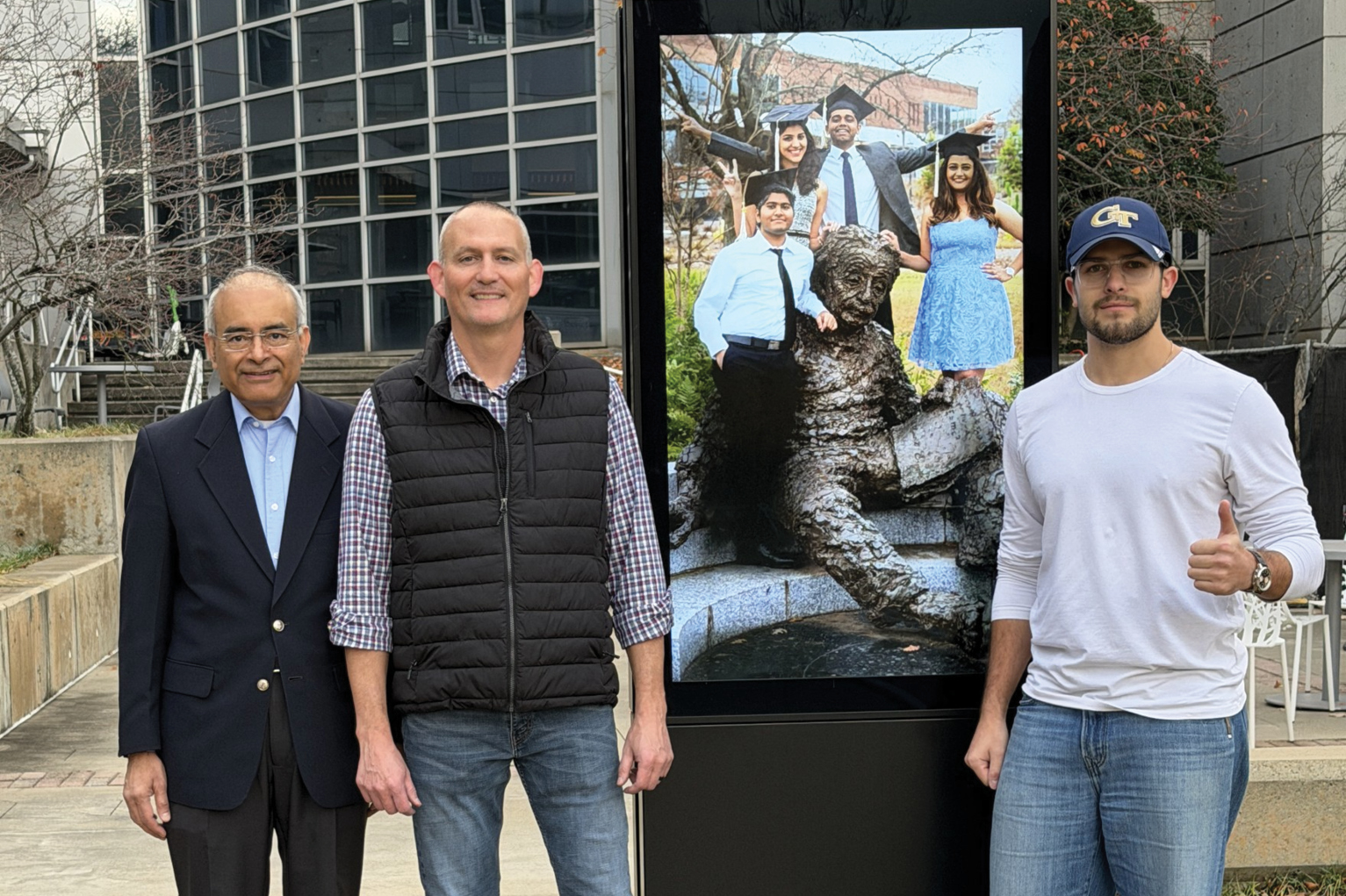
For more than eight years, MRI, manufacturer of the BoldVu rugged outdoor displays, has supported graduate research in the Microelectronics and Emerging Technologies Thermal Lab (METTL), led by Yogendra Joshi, John M. McKenney and Warren D. Shiver Distinguished Chair in Building Mechanical Systems. The partnership has funded multiple student thesis projects, produced several published papers, and supported engineering improvements incorporated into MRI’s products.
“It’s been a great collaboration,” Joshi said. “Multiple master’s students have completed their thesis projects on different challenges facing the same product line, and they’ve gone on to jobs at premier companies.”
Engineering for the Outdoors
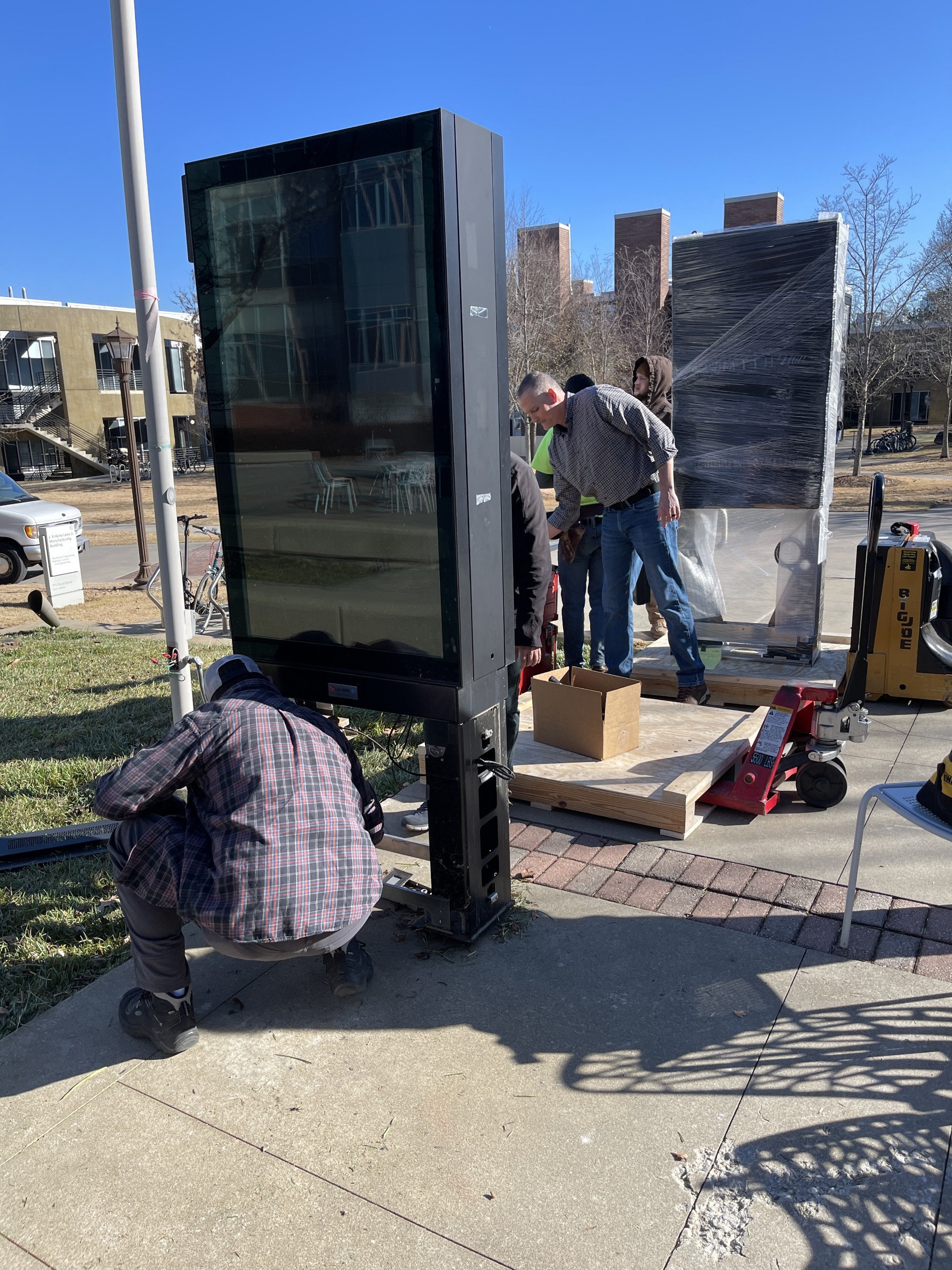
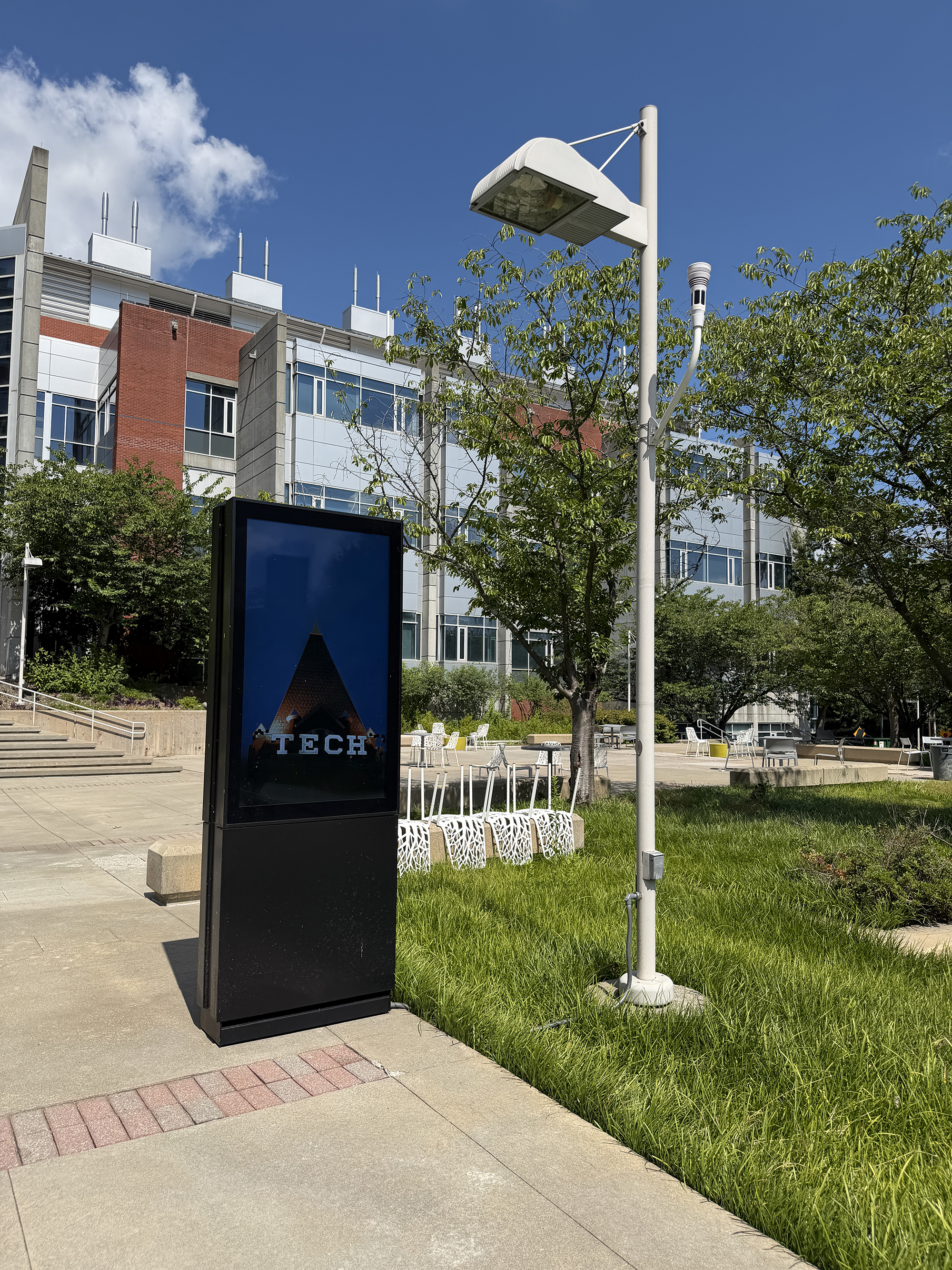
MRI’s BoldVu digital displays are found in locations such as bus shelters and outdoor kiosks around the world. One is located outside the J. Erskine Love Jr. Manufacturing Building on the Georgia Tech campus, which was donated by the company. The displays are designed to operate for years and withstand changing temperatures and weather while protecting the electronics inside.
“For products to survive and thrive in any direct outdoor solar-exposed climate for a decade or more, it has to start with sound engineering,” said Bill Dunn, MRI founder, president, and CEO. “Over the past 20-plus years, MRI has been faced with many challenges understanding the interior environment of outdoor electronics contained in sealed enclosures. Our collaboration with Georgia Tech has allowed MRI to better understand and manage the microclimate within our products.”
The company’s engineering challenges have provided a steady stream of research questions for METTL’s master’s students. Their work has resulted in research publications and helped prepare students for careers at companies including Google, Samsung, and NVIDIA.
For Maxim Belinson, who completed his master’s degree in mechanical engineering in August, the experience offered a balance of academic research and practical engineering. His thesis examined how conditions inside an outdoor display change as temperatures fluctuate.
"My work developed models and experimental methods that capture how pressure and temperature change inside a sealed outdoor display over time," Belinson said. "The goal was to predict how seals will perform throughout a product's lifetime and identify potential weaknesses before they appear in the field."
He also completed an internship with MRI, where his work contributed to a patent and a new product enhancement based on his idea.
“It was both an academic and industrial project,” Belinson said. “It was just the perfect pair.”
Belinson's work was one of several graduate research projects supported by MRI over the years.
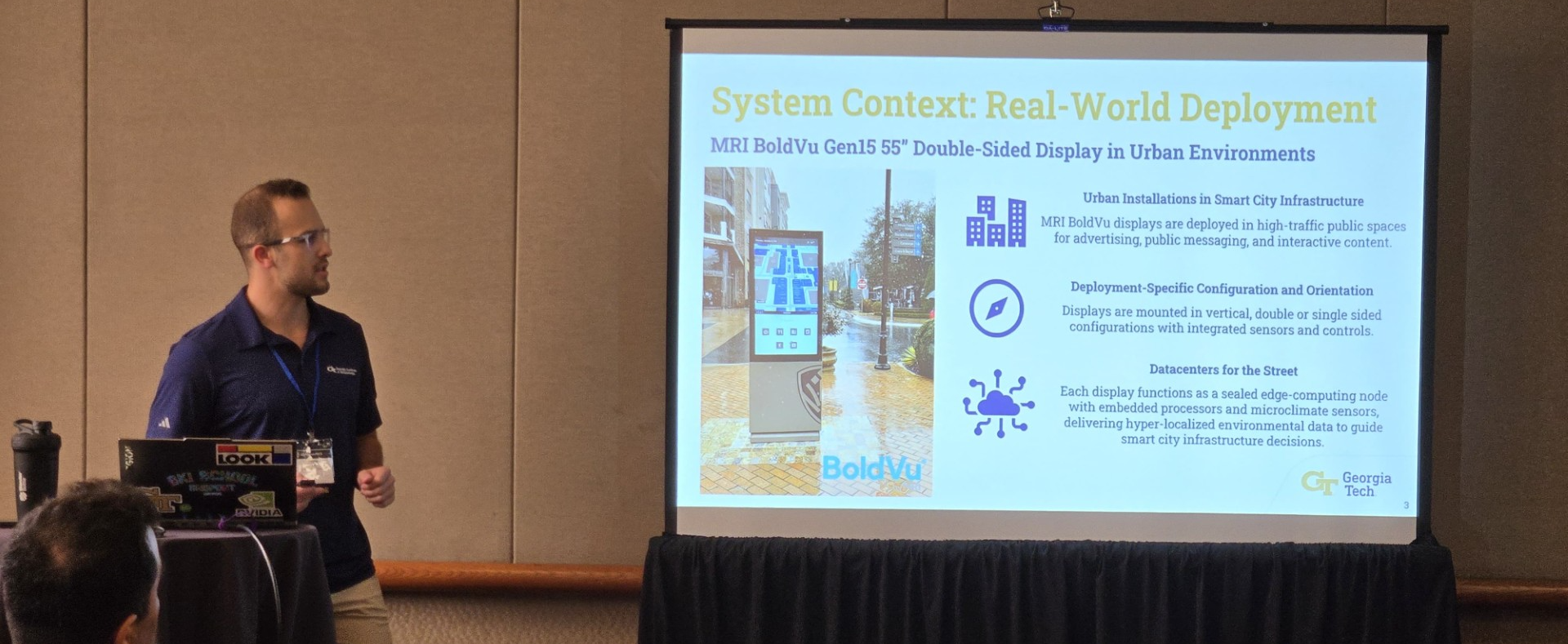
Among the students who contributed to the collaboration was Jeho Kim, B.S. ME 2017, M.S. ME 2019, who developed and validated the lab's first computational fluid dynamics and heat transfer model of an outdoor display. Shuv Dey, B.S. ME 2018, M.S. ME 2021, Ph.D. ME 2023, expanded the work into environmental sensing technologies, studying sensor packaging for urban microclimate monitoring and developing transient climate models for 5G equipment integrated with outdoor displays.
Luis Diego Monge Jimenez, B.S. ME 2019, M.S. ME 2022, incorporated structural analysis into thermal simulations, allowing researchers to better understand and reduce LCD panel deformation caused by heat and pressure loads.
Michael Ayers, M.S. ME 2024, conducted a comprehensive leakage study linking gasket leaks to pressure signature changes through laboratory testing and simulation. Samuel Glowacki, M.S. ME 2024, further explored enclosure behavior through experimental testing and simulation, including efforts to apply machine learning techniques for leak detection.
Together, these projects helped to improve the reliability and performance of the outdoor displays’ electronic systems.
“Contributions provided by Dr. Joshi and his team of engineering students touched on topics including thermal, pressure, sealing, humidity, and internal condensation management,” Dunn said. “As a result, MRI’s products are more robust and long-lived than ever, providing the best total cost of ownership for our customers and earning MRI recognition as the provider of the best digital-out-of-home products worldwide.”
Benefits Beyond the Laboratory
For students, the collaboration provided an opportunity to see how research concepts translate into commercial products. At the same time, MRI leveraged the findings to address engineering challenges and develop the next generation of its displays.
The collaboration also reflects Georgia Tech's connection with the company. Dunn and MRI’s vice president of mechanical and production engineering, Mike Brown, are Georgia Tech alumni. Dunn graduated in 1976 with a degree in electrical engineering, and Brown earned his master’s degree in mechanical engineering from the Woodruff School in 2004.
“Our collaboration has certainly been mutually beneficial,” said Brown. “The task of cooling outdoor displays is quite complex and has offered a number of interesting topics for the students to study and make real contributions.”
While the partnership is currently on pause as MRI evaluates recent research findings and considers next steps, Joshi said the collaboration demonstrates the value of sustained partnerships between industry and academia.
“It’s a local company, and it’s just been a great supporter of Georgia Tech,” Joshi said.