Georgia Tech Researchers Create “Living” Polymers That Grow, Heal, and Transform
March 25, 2026
Story by Tracie Troha | Photos by Mikey Fuller
Most plastic and rubber materials remain in a fixed shape from the moment they leave the mold. Their size and function are the same until they wear out or break. But what if synthetic materials could behave more like living organisms, growing or repairing themselves when needed?
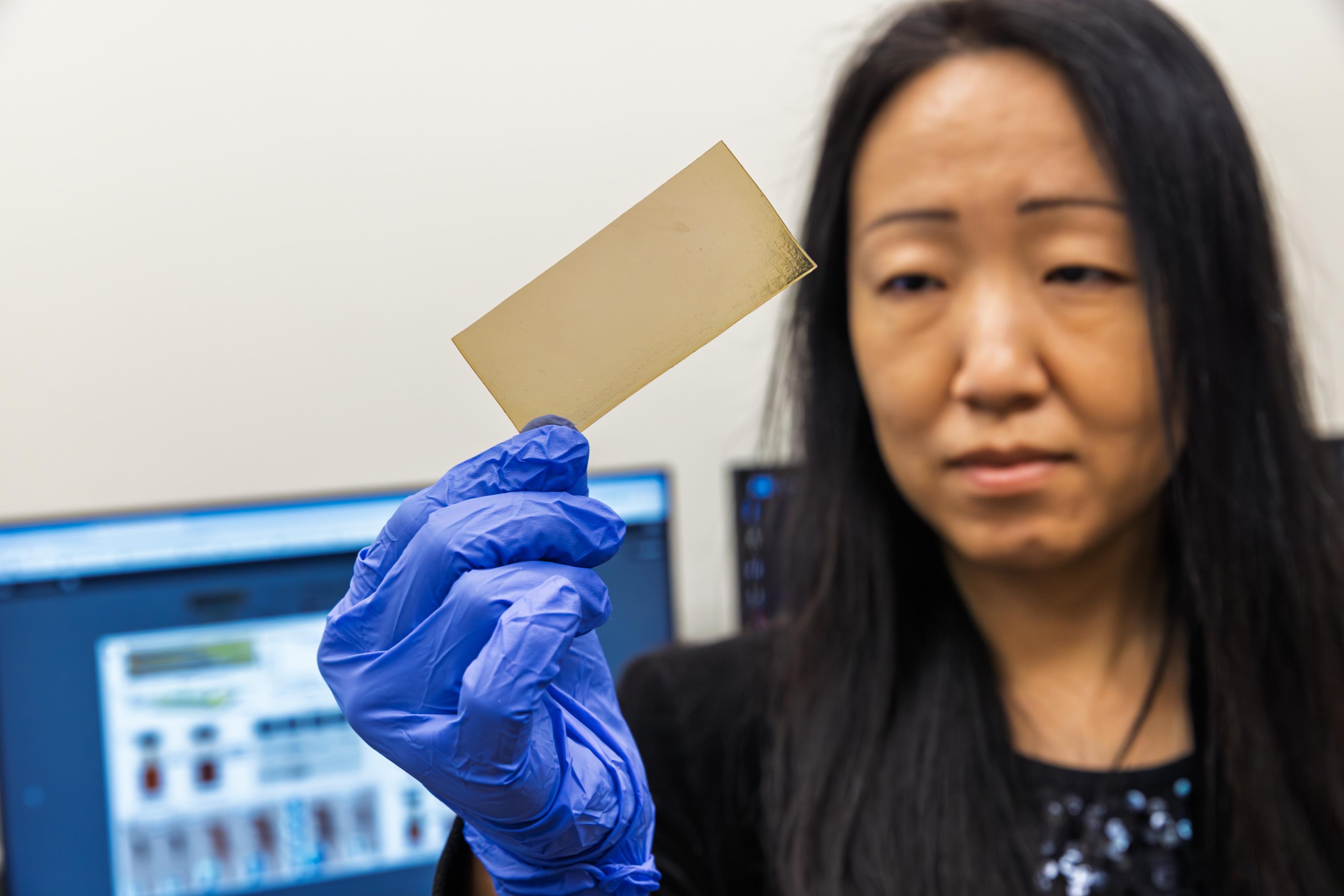
A research team led by Yuhang Hu, associate professor in the George W. Woodruff School of Mechanical Engineering and the School of Chemical and Biomolecular Engineering, has created a new material designed to do exactly that. In a new study published in Advanced Materials, Hu and her collaborators describe a groundbreaking class of “living” polymers that can grow, shrink, heal, and even regenerate long after fabrication.
Their work combines advances in chemistry, mechanics, and materials design into a polymer platform that could reshape how engineered products are built, maintained, and recycled.
Material Inspired by Living Systems
Hu and her colleagues wanted to challenge the limitations of synthetic polymers by designing materials that behave like living systems.
“Living systems constantly remodel themselves—growing, healing, adapting, and even reshaping their mechanical properties in response to their environment,” Hu said. “What inspired us was the question: Can we design synthetic materials that behave more like living matter?”
To answer that question, the researchers designed what Hu describes as an “open, nonequilibrium” polymer platform. In this system, small molecules can move in and out of the polymer network, reversible chemical reactions occur, and the material itself can expand or contract.
The result is a material that can grow new polymer segments, remove existing ones, change stiffness, and regenerate damaged regions.
“Conceptually, it’s like giving the material metabolism,” Hu said.
Growth, Degrowth, and Regeneration on Demand
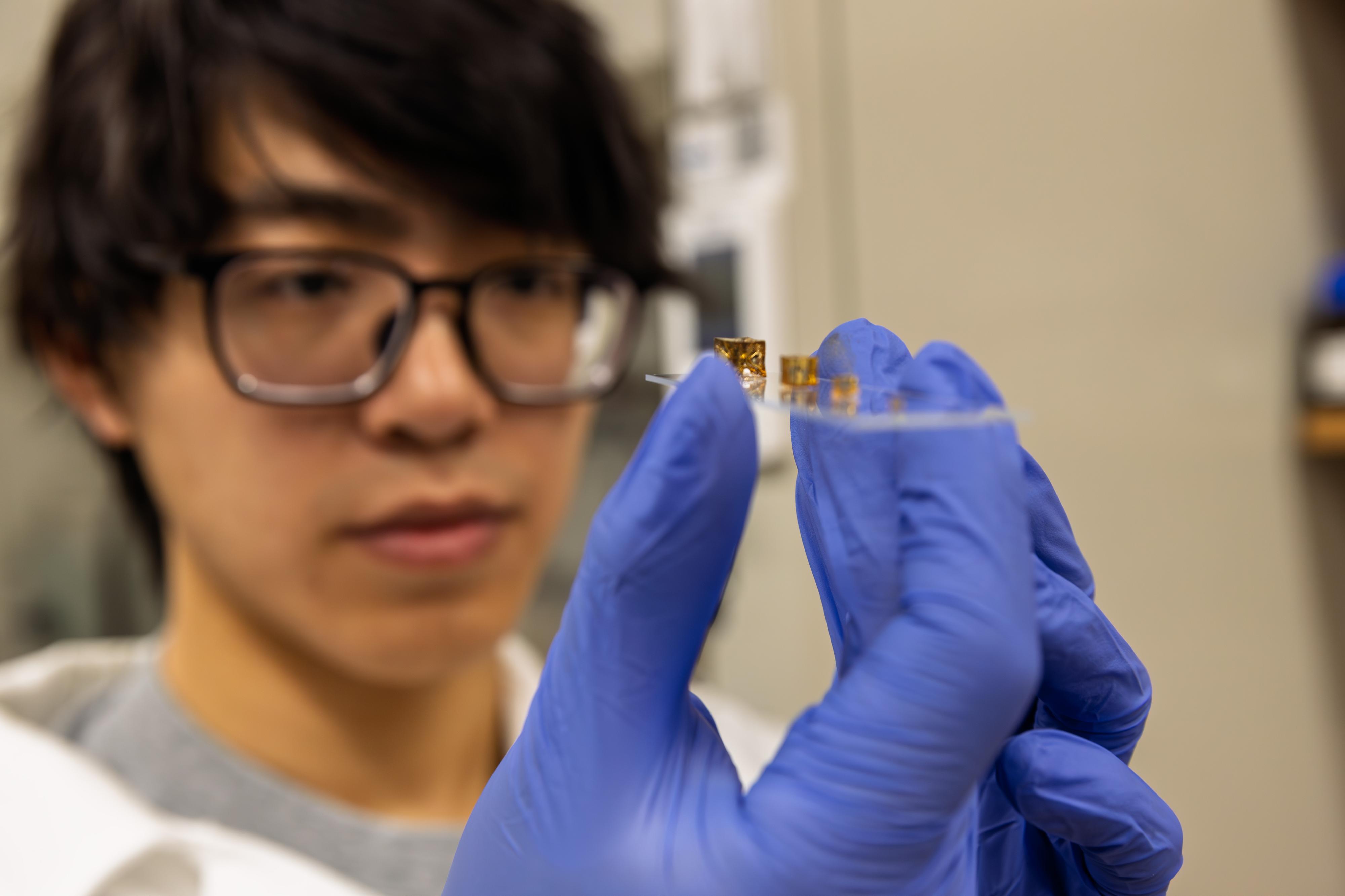
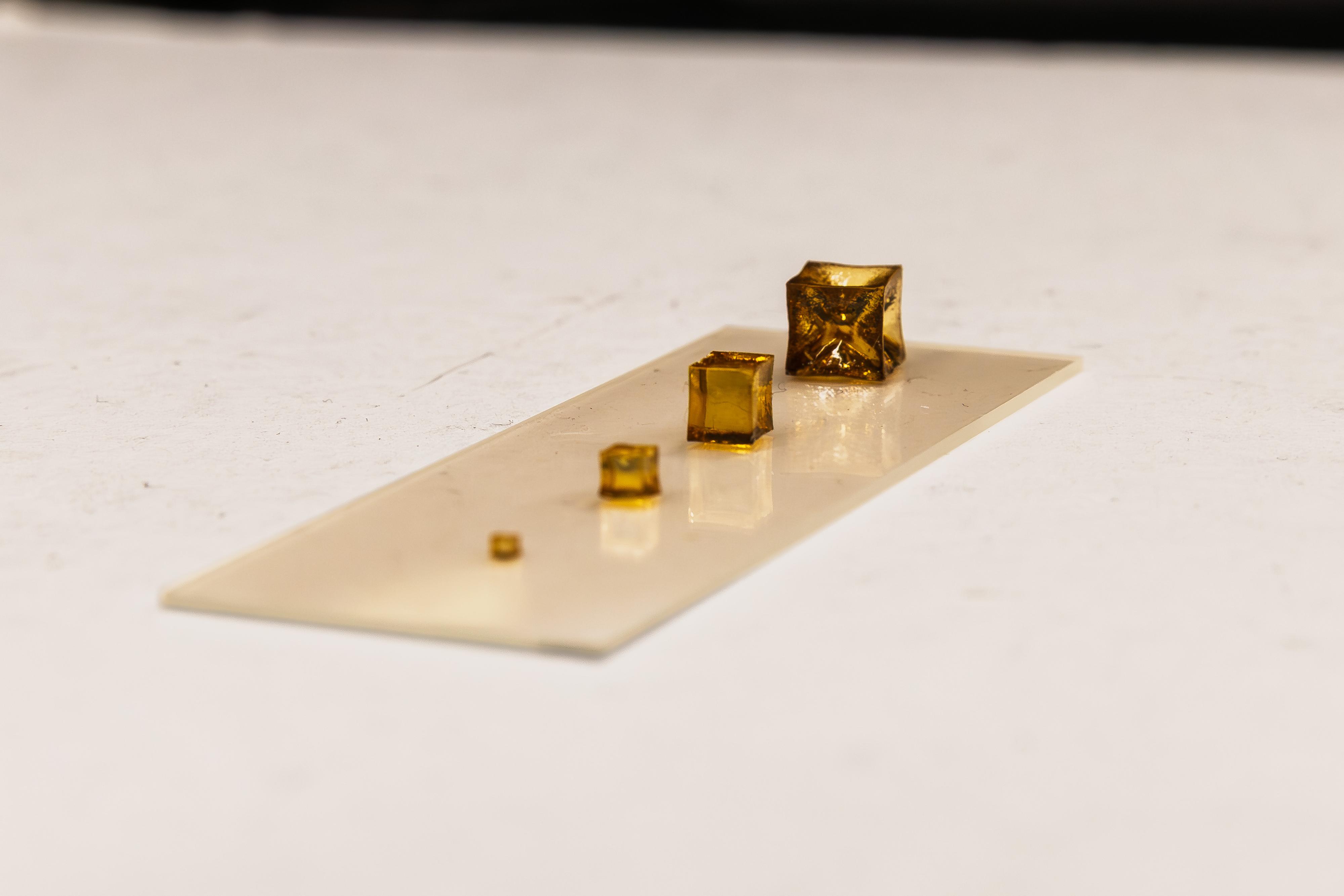
The research team’s polymers can grow when supplied with the right chemical “nutrients.” As new molecules diffuse into the material, they react with existing polymer chains, effectively adding new material and causing the structure to expand. Under different conditions, the chemistry can work in reverse, breaking the polymer chains and causing the material to shrink.
Equally important, the polymer network can reorganize itself during these processes, preventing the internal stresses that would normally cause a growing material to crack or fail.
“Most current self-healing materials rely on fusing cracks or reforming local bonds. That’s useful, but limited,” Hu said. “Our system goes further. It can add new material, remove material, or alter composition after fabrication. That opens possibilities for structural regeneration, functional repair, and property reprogramming, especially beneficial in high-value systems like aerospace, robotics, and biomedical devices.”
Demonstrating Adaptive Materials
In the study, the team built several prototype devices to demonstrate the material’s capabilities.
In one experiment, researchers embedded liquid metal within the polymer to create a flexible antenna. As the polymer grew longer, the antenna’s electrical length changed, shifting its resonant frequency. The device could essentially be reprogrammed by allowing the material to grow.
The team also built a small magnetic soft robot made from the polymer. As the robot’s body expanded through chemical growth, it became capable of manipulating larger objects, demonstrating how adaptive materials could allow robots to change their capabilities over time.
Another notable demonstration involved localized regeneration. Using light to trigger chemical reactions in specific areas, the researchers were able to regrow structures that had been removed from the material. In one case, a gecko-shaped polymer structure had part of a limb cut off and then regrown piece by piece.
“In the future, adaptive electronics, repairable devices, and reconfigurable structures could all benefit from materials that physically evolve after deployment,” Hu said.
A Path Toward More Sustainable Polymers
Hu said this research has major implications for sustainability. Today, most plastics end up in landfills because it’s too difficult to recycle them. The new polymer platform provides a better alternative.
“One of the most exciting aspects of this platform is that growth and reprogramming do not require complete depolymerization each time,” she said. “Instead of discarding a polymer product, you can regrow, reshape, or retune it. When needed, the polymer can also be chemically broken down into recoverable monomers and reused.”
That combination of adaptability and recyclability could reduce reliance on new petroleum-based materials and lower the environmental impact of plastics.
Innovation Through Collaboration
The project brought together researchers in mechanical engineering, chemical engineering, chemistry, and materials science, illustrating the power of interdisciplinary collaboration.
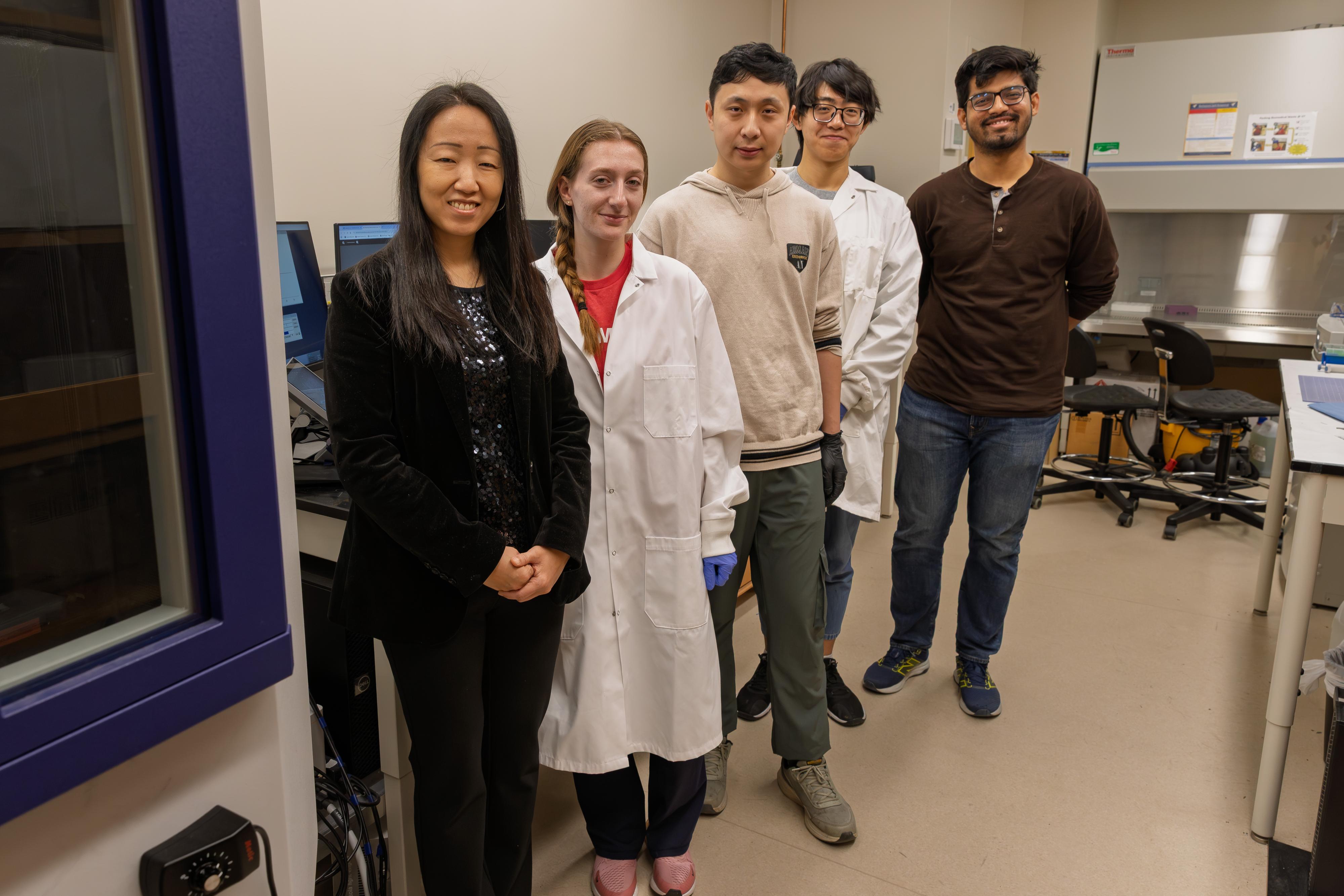
In addition to Hu, the Georgia Tech research team consisted of graduate students Jiahe Huang and Huajian Ji from the School of Chemical and Biomolecular Engineering; Jiehao Chen, Dongjing He, and Haohui Zhang from the Woodruff School; and Xuelin Sui and Associate Professor Will Gutekunst from the School of Chemistry and Biochemistry. The team also included Michael D. Dickey and Febby Krisnadi from the Department of Chemical and Biomolecular Engineering at North Carolina State University.
“The key innovation—chemomechanical coupling mechanism—required simultaneous control of reaction kinetics, nutrient transport, and evolving mechanical stresses,” Hu said. “If any one of those components were treated in isolation, continuous tunable growth would not occur.”
The interdisciplinary collaboration allowed the researchers to move from molecular design to material development and ultimately to functional devices such as reconfigurable antennas and soft robots.
Looking Ahead
Hu said she and her research team are excited about extending their work to other chemistry systems and materials.
“Commercially, adaptive electronics and soft robotics are immediate frontiers,” Hu said. “Creatively, imagine structures that are ‘seeded’ and later cultivated into final form. Architects, artists, and designers might one day treat materials less like static matter but more like programmable organisms.”
As the work of Hu’s research team shows, the boundary between living and synthetic materials is beginning to blur, and the possibilities are starting to grow.
About the Research
The research was supported by the Office of Naval Research Award No. N00014-23-1-2754.