Woodruff School Students Help Turn 3D Printing Waste Into Art
September 9, 2026
By Tracie Troha
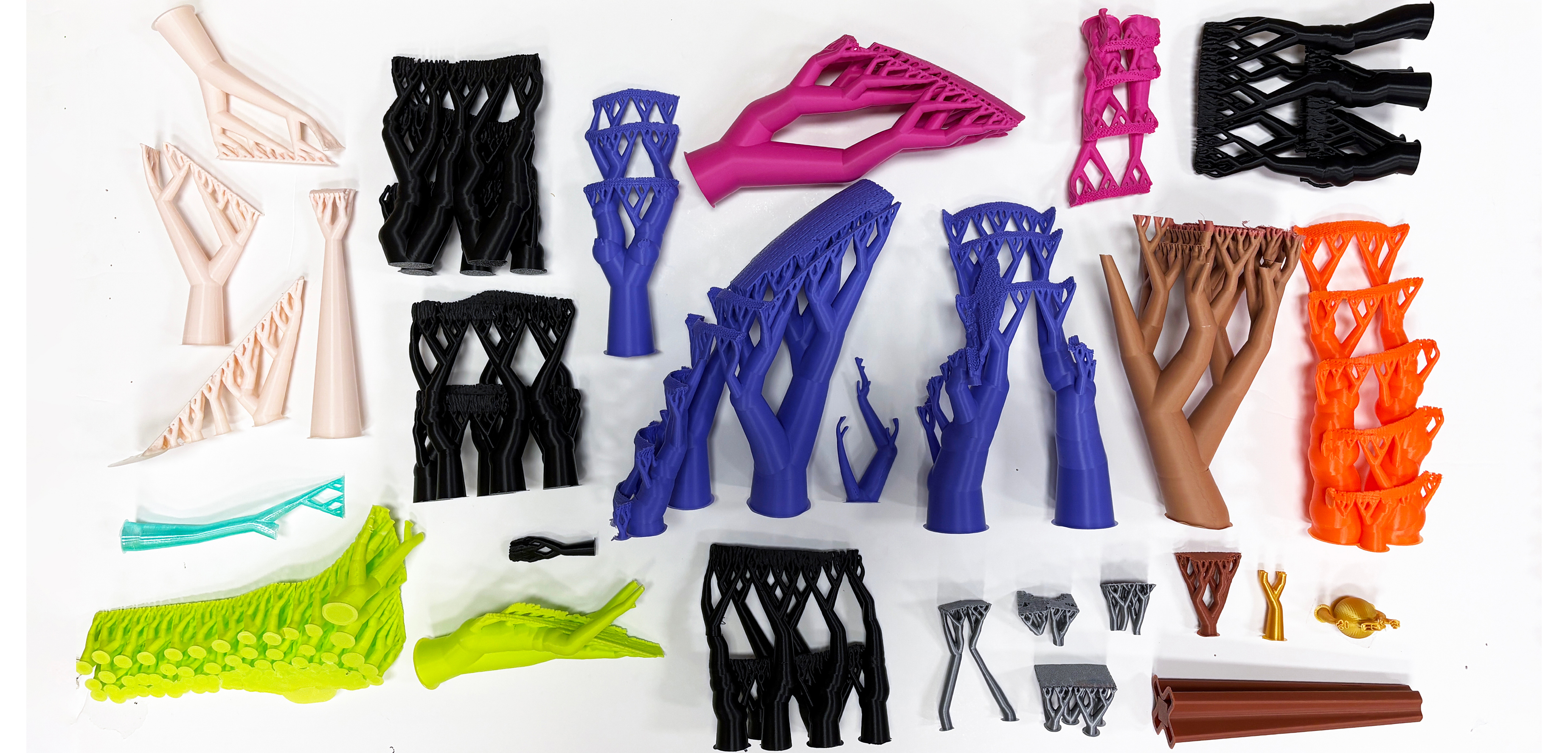
What happens when discarded 3D printing plastic is given a second life? At Georgia Tech, it can become part of a large-scale installation that combines architecture, music, engineering, and light.
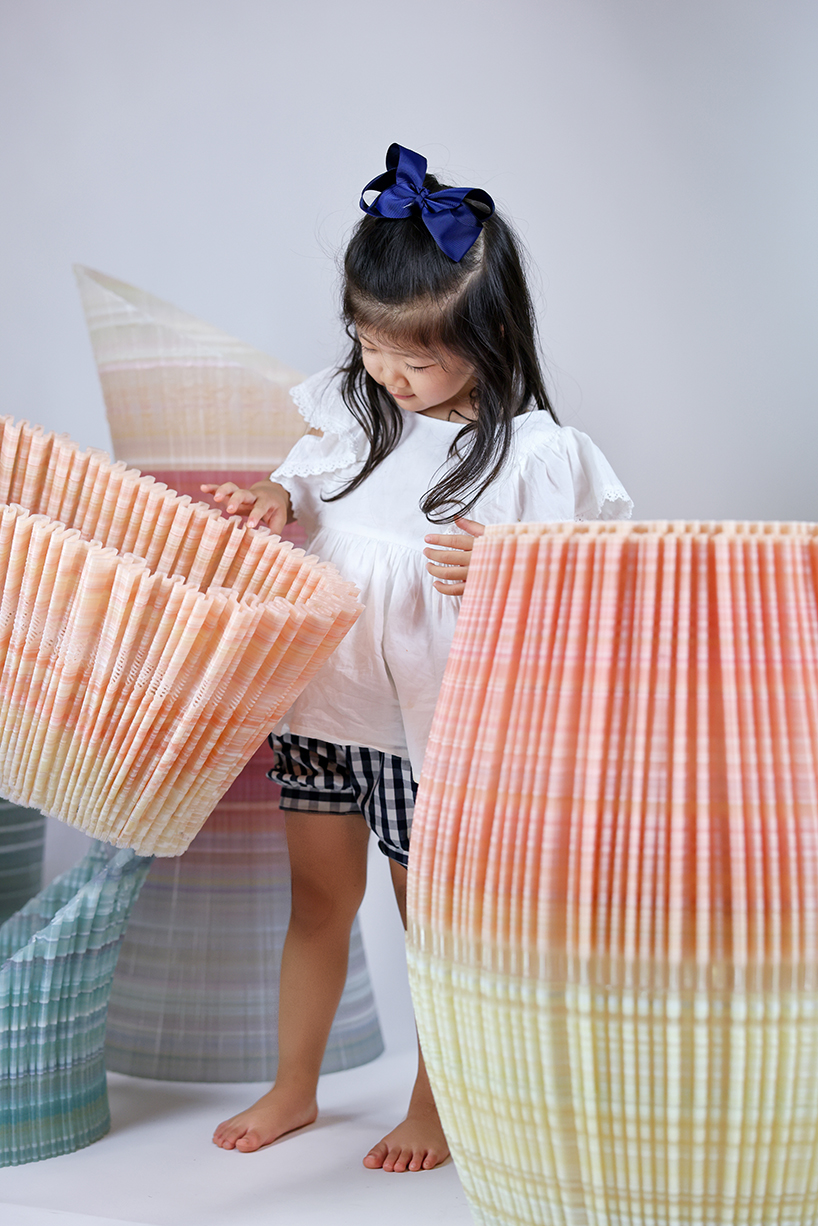
Two students from the George W. Woodruff School of Mechanical Engineering helped make that transformation possible for Ninefold: A Distributed Resonant Field, an interdisciplinary installation that will be on view Sept. 14 – Oct. 30 in the Interactive Media Zone at the Georgia Tech Library.
Graduate student Arunn Sankar and second-year student Andrew Hong helped develop the process and operate the equipment used to transform discarded 3D printing material from the Flowers Invention Studio into components for the installation.
The installation was created by Hyojin Kwon, an assistant professor in the School of Architecture; Jeremy Muller, a lecturer in the School of Music; and Misri Patel, a 2025 Ventulett NEXT Fellow in the School of Architecture. The project was made possible through the National Science Foundation-funded ReCreateIt: Transforming Plastic Waste Through Community-Led Manufacturing project, led at Tech by the Woodruff School’s Eugene C. Gwaltney, Jr. School Chair Carolyn Seepersad. Kwon joined the ReCreateIt research team as a co-principal investigator, bringing her work in architecture, circular material systems, and large-scale fabrication to the collaboration.
“What has been particularly valuable about the collaboration is that architecture and mechanical engineering approach the same material from different but complementary perspectives,” Kwon said. “As architects, we are interested in how recycled plastic can generate new spatial, aesthetic, cultural, and experiential possibilities. Mechanical engineering brings critical expertise in material behavior, manufacturing, process constraints, and performance.”
That mechanical engineering expertise became crucial when the team began translating the project from concept to full-scale installation.
Sankar helped install and set up a GigabotX 2 large-scale pellet 3D printer at the Georgia Tech Manufacturing Institute and conducted initial test prints and material experiments. His work established an operational foundation for the project and showed him how sensitive large-scale pellet printing can be to changes in the process.
“I found it interesting to see just how sensitive prints are to factors like nozzle temperatures, cooling rates, and material dryness,” Sankar said. “All of these settings can be adjusted on hobbyist 3D printers, but their effects are much more pronounced with a large-scale granule printer like the Gigabot.”
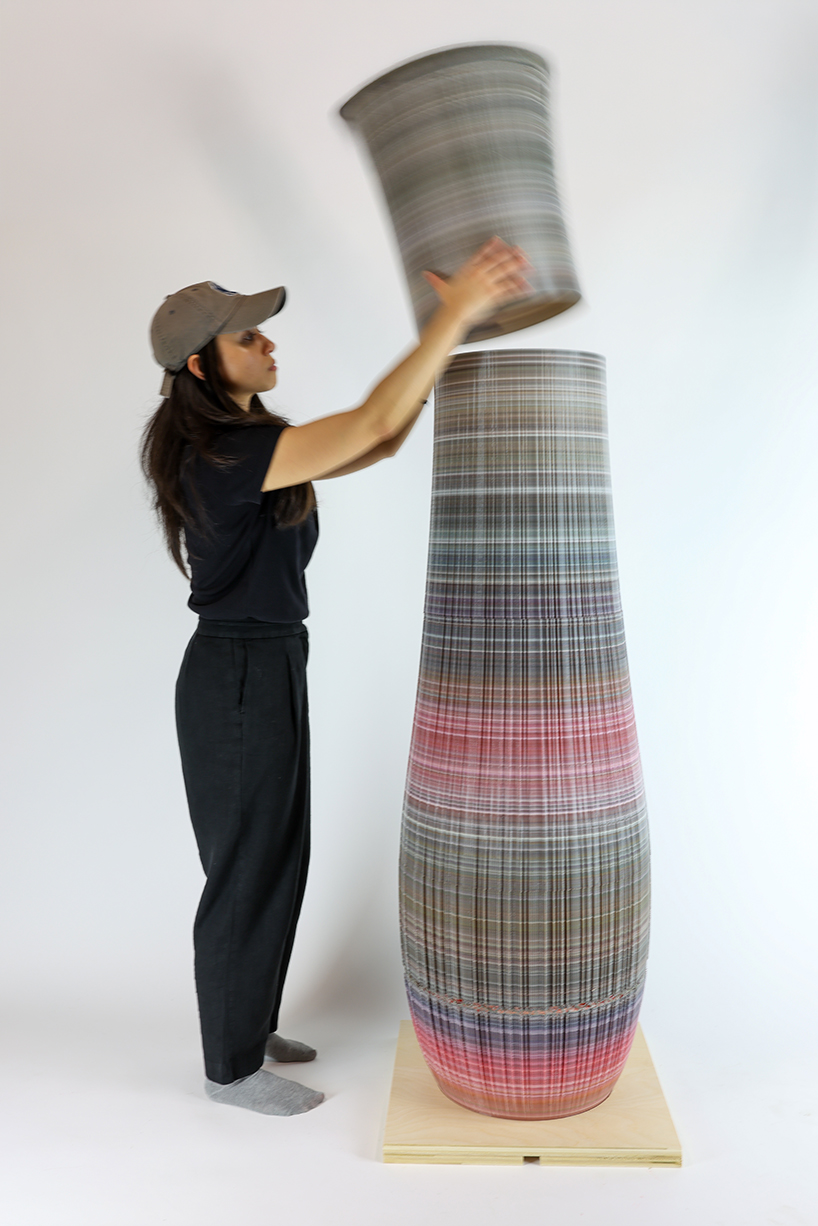
Hong became involved during the summer production, helping operate and manage the GigabotX 2, prepare and monitor prints, troubleshoot failures, and refine printing parameters. In about a month, the team produced 27 large components, with some prints taking days to complete.
“Printing with recycled materials was different from the conventional 3D printing I was used to,” Hong said. “Recycled materials required printing at lower temperatures than their new counterparts, and the margin of error was extremely narrow. Just being a few degrees off could result in the material being burned.”
Hong also found that small changes in print speed could dramatically affect the appearance of the finished material.
“If a print was printed just 5% faster, the final object would turn from translucent to completely opaque, so finding this fine line was a really fun challenge,” he said.
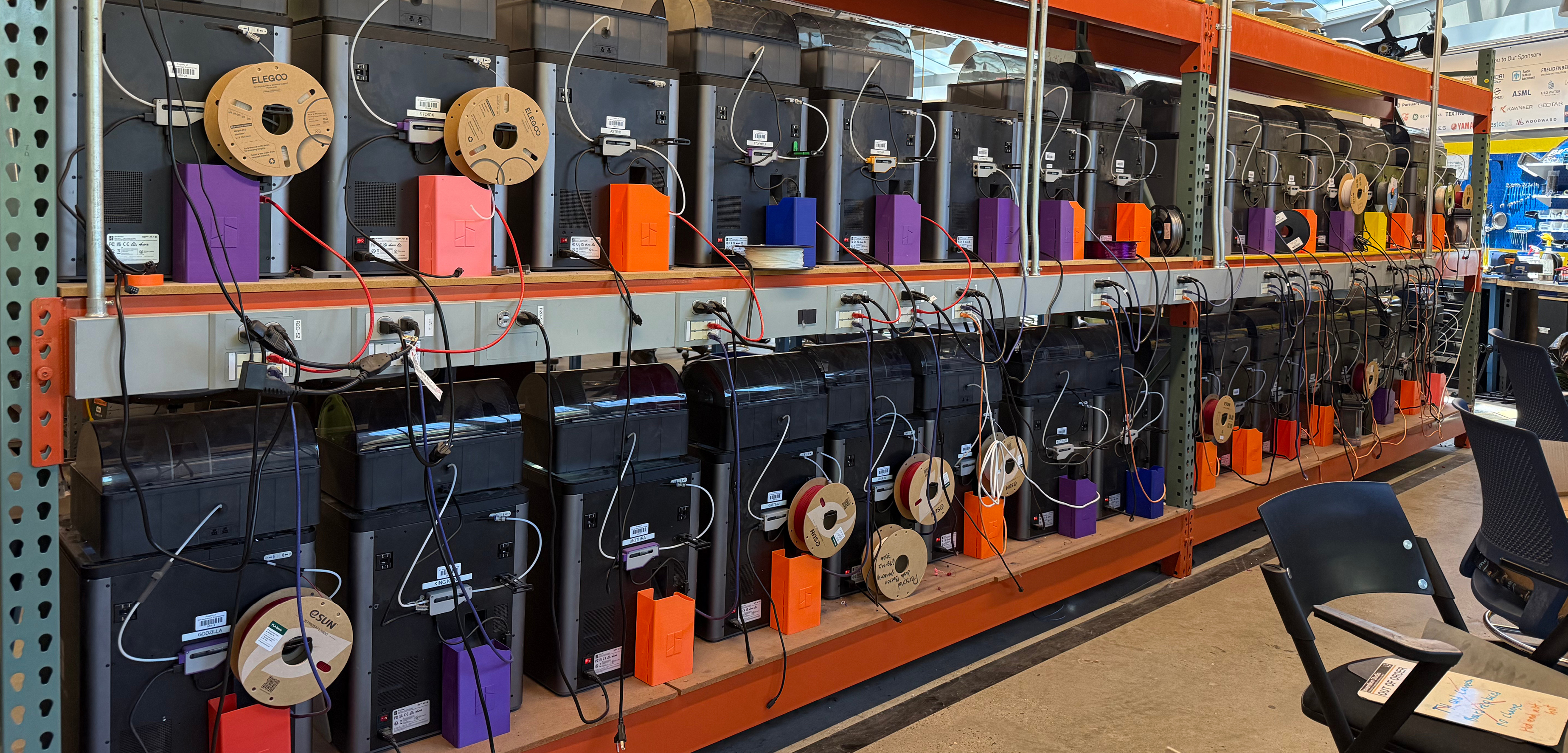
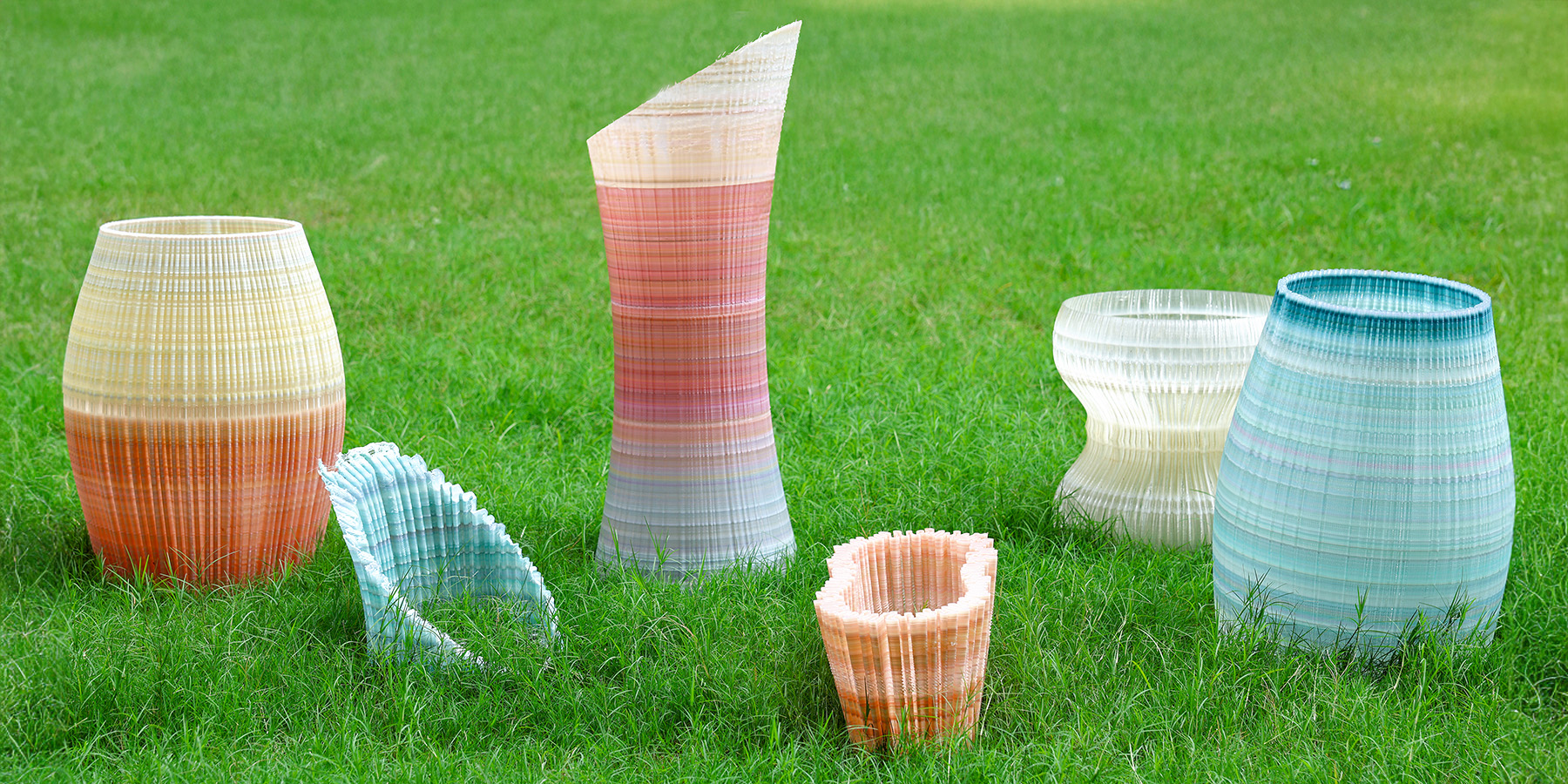
The process began with discarded polylactic acid, or PLA, from the Flowers Invention Studio. The students sorted the waste by material type and color, processed it into particles, and blended it with clear PLA pellets before feeding the mixture into the printer.
“The Woodruff students' contribution was developing the bridge between waste stream, material processing, machine operation, and architectural fabrication,” Kwon said. “Their work allowed what began as discarded 3D printing waste from the Georgia Tech community to become the material and chromatic basis of a full-scale architectural and acoustic installation.”
For Sankar, seeing the finished installation offered a striking reminder of how far the material had traveled from its original form.
“It's very gratifying and a little humbling to know that such visually stunning pieces started out as plastic shreds,” Sankar said. “I'm happy to know that my printer setup was robust enough to survive the many, many hours of printing needed to bring Ninefold to life.”
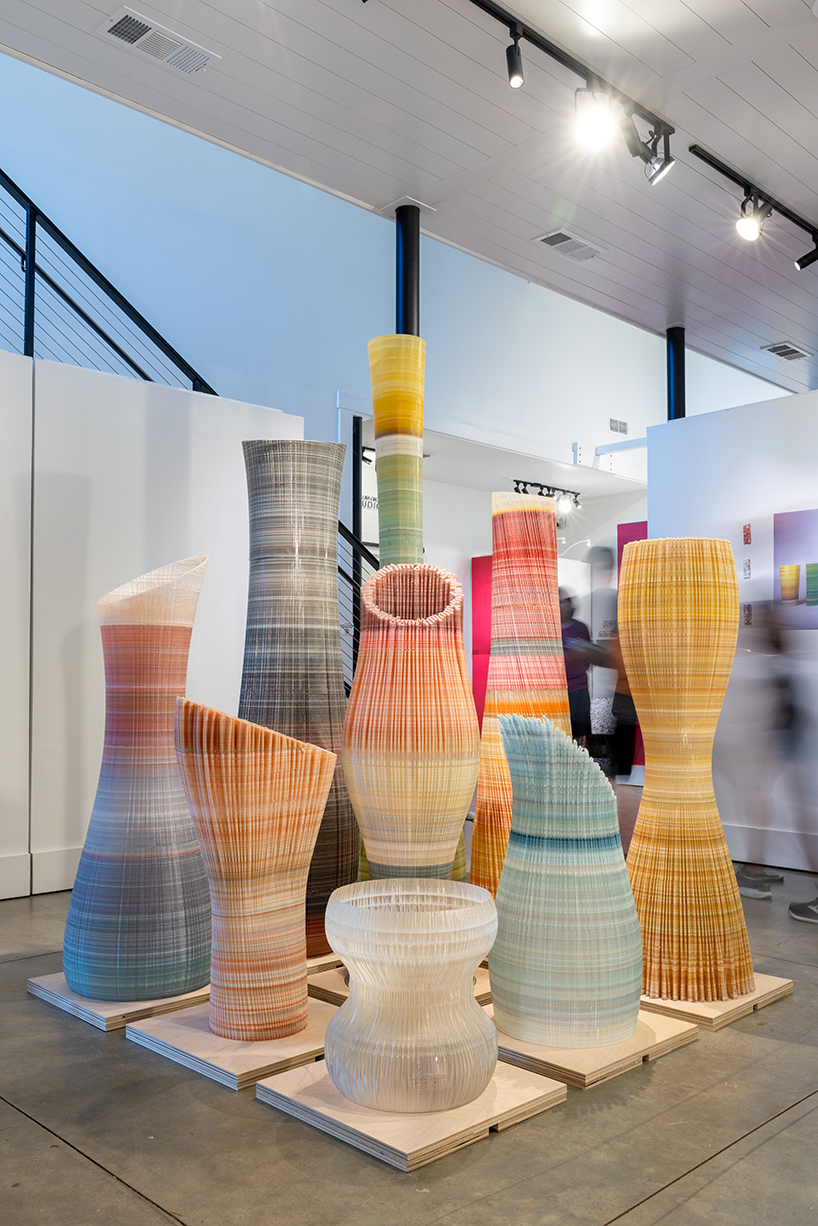
Ninefold consists of nine large artifacts corresponding to nine harmonic frequencies. Visitors move among the structures while the sound changes based on their position, creating an immersive experience that combines the objects’ visual qualities with a shifting acoustic field.
“Ultimately, I hope people experience the exhibition first through curiosity,” Kwon said. “They see these strange, colorful, translucent objects, hear the changing field of sound, move among them, and only then realize that much of what they are encountering began as discarded plastic. That moment of recognition can shift waste from something abstract and undesirable into something with unrealized spatial, cultural, and creative potential.”
Ninefold: A Distributed Resonant Field will be on view at the Georgia Tech Library from 10 a.m. to 7 p.m. daily beginning Sept. 14.