
Woodruff School Teams Shine at Spring 2026 Capstone Design Expo
April 29, 2026
By Tracie Troha
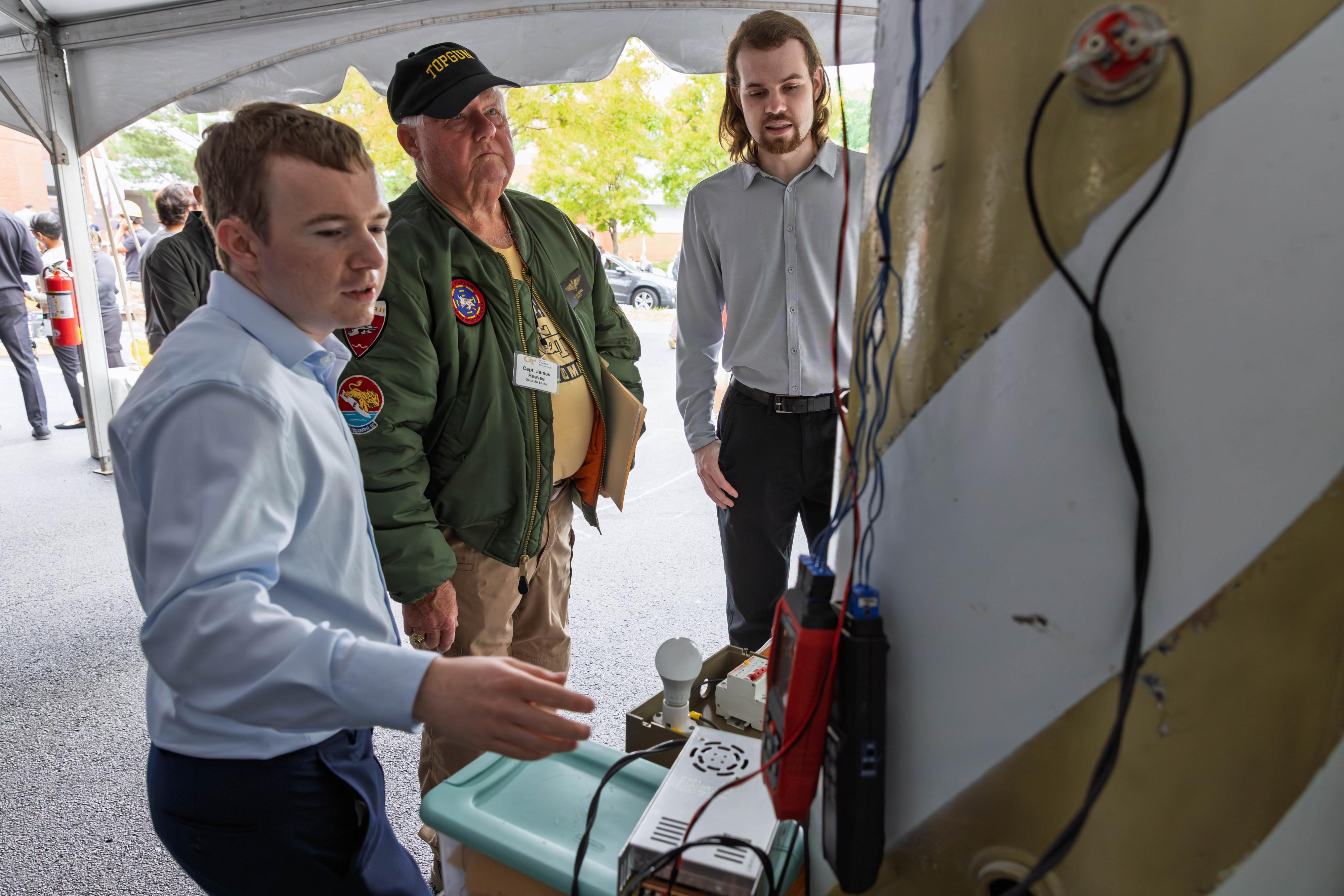
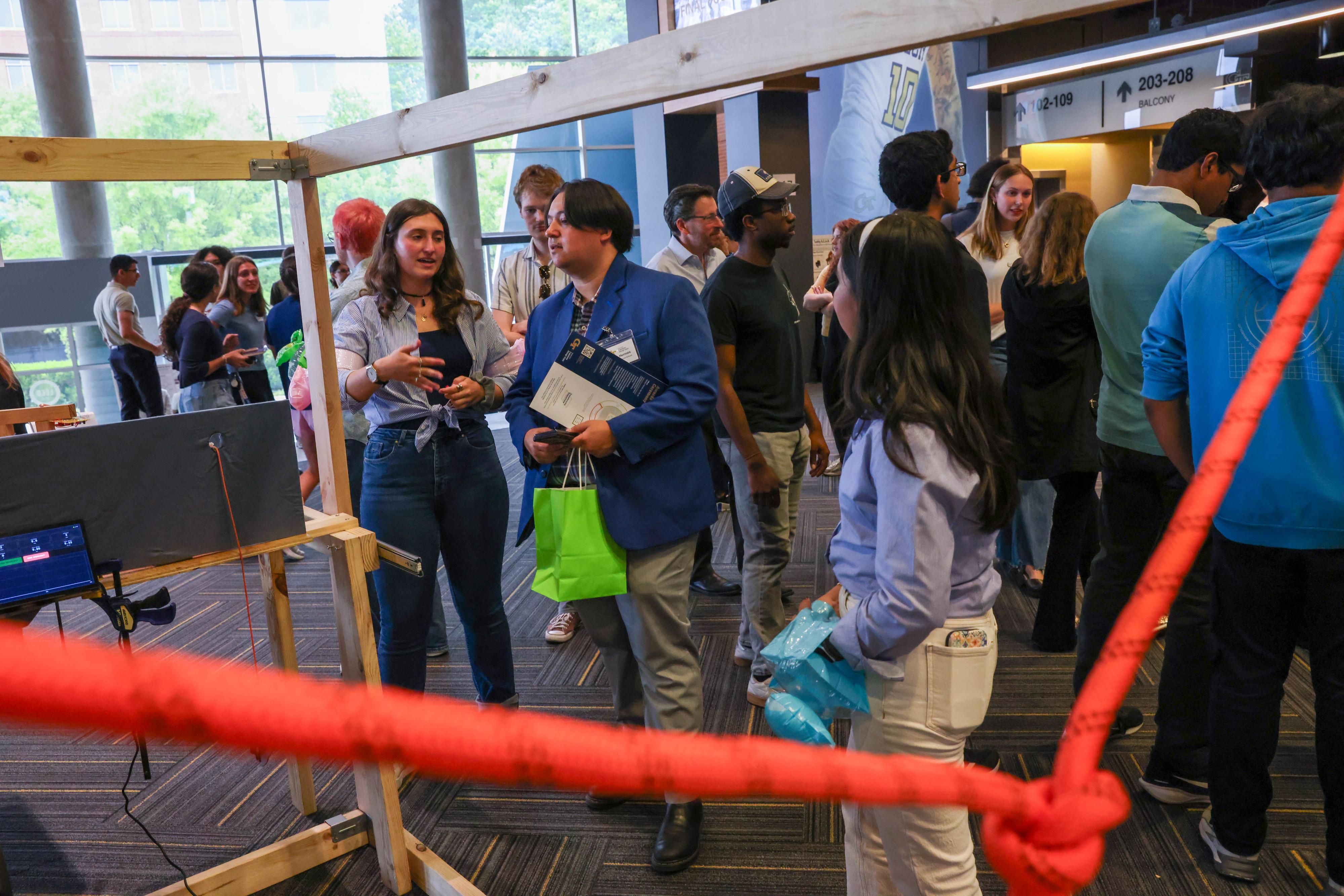
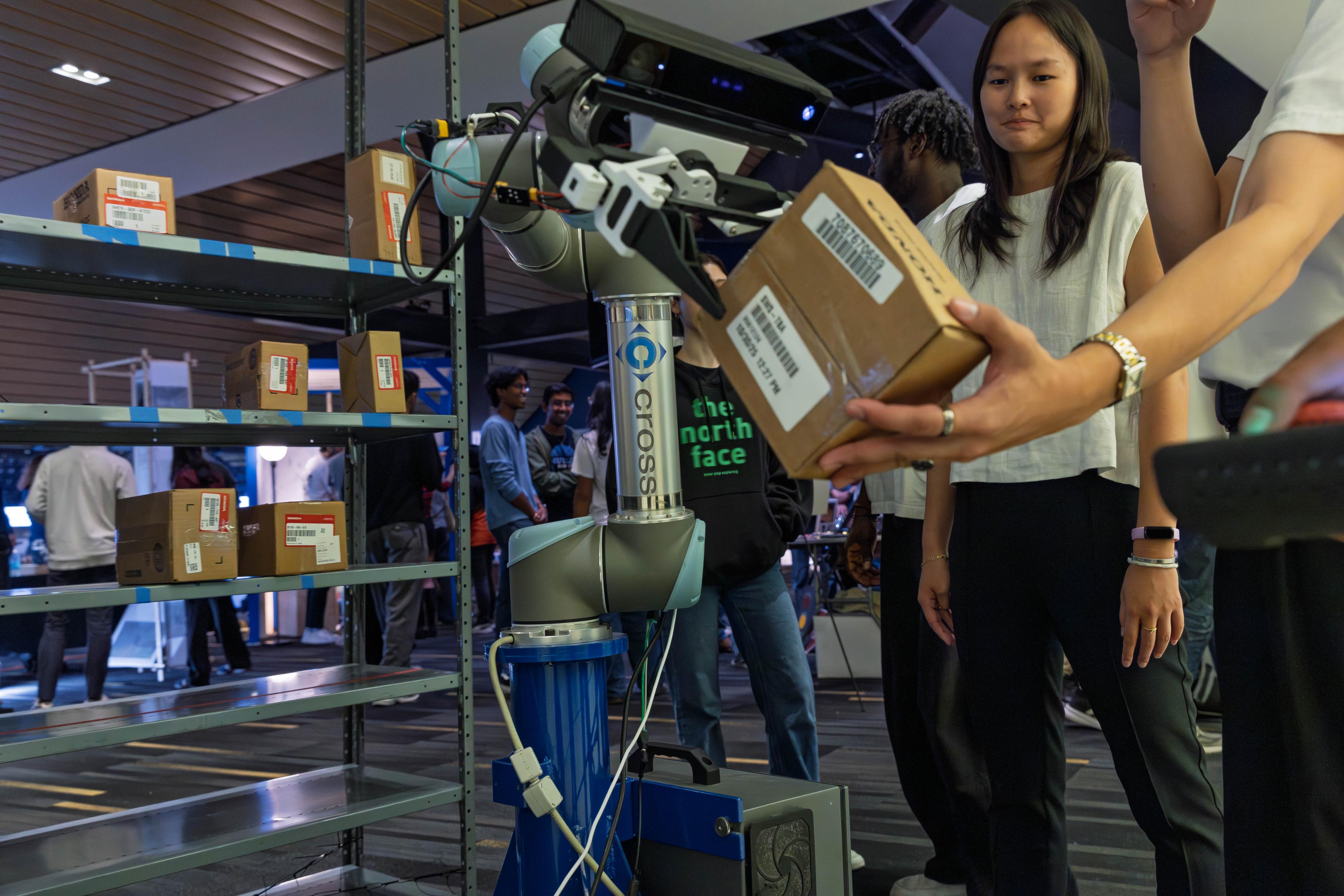
Students from the George W. Woodruff School of Mechanical Engineering joined hundreds of their peers from across campus at the Spring 2026 Capstone Design Expo on April 28 at McCamish Pavilion, presenting innovative solutions to real-world engineering challenges.
More than 1,300 students from 12 schools participated in the semester-end showcase, representing 237 teams. Of those, 75 teams represented the Woodruff School, highlighting projects in mechanical engineering, robotics, manufacturing, energy, product design, and other fields.
The expo marked the culmination of months of work in the Capstone Design course, where students collaborated in teams to develop solutions for challenges proposed by industrial and research project sponsors or for their own entrepreneurial projects.
Several Woodruff School teams were recognized during the expo’s awards ceremony.
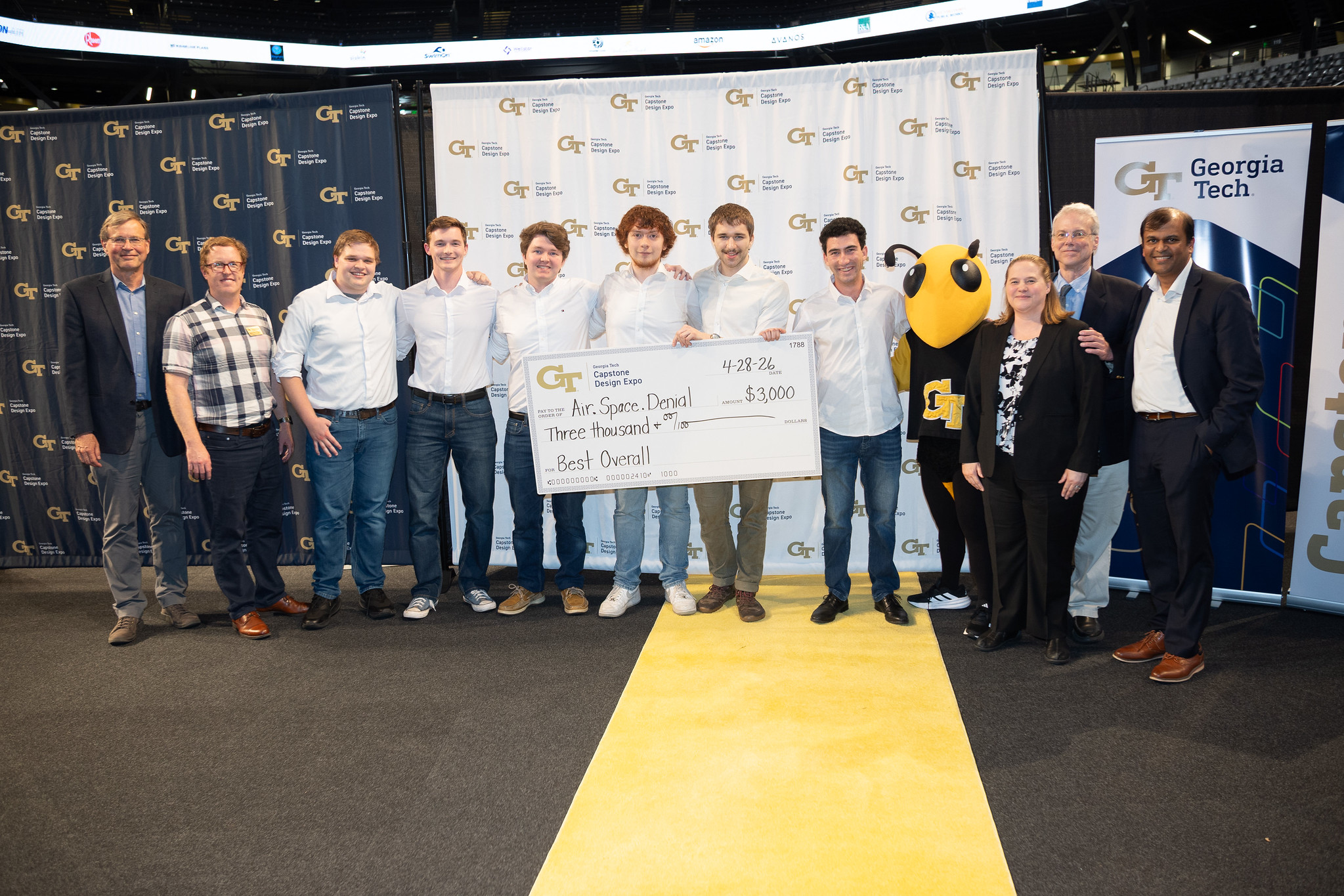
The interdisciplinary team Air. Space. Denial, which included mechanical engineering students Grayson Benton, Timothy Judson, Christopher Kirschner, and Andrew Silver, was one of two teams tied for the best overall prize. Sponsored by the U.S. Department of War Defense Innovation Unit, the team was challenged to counter drones spying on military bases or carrying explosives targeting U.S. forces. Their solution was a series of spiderweb-like nets mounted on a drone that would drop on an enemy craft, tangling the rotors and downing the machine.
“I’m excited and a little surprised that we won,” Benton said. “I’m also very proud of our team. Our drone worked perfectly every time.”
Judson added that he was also very proud of his teammates and that all their hard work paid off.
“We had a lot of late nights, but we also had a lot of fun,” he said.
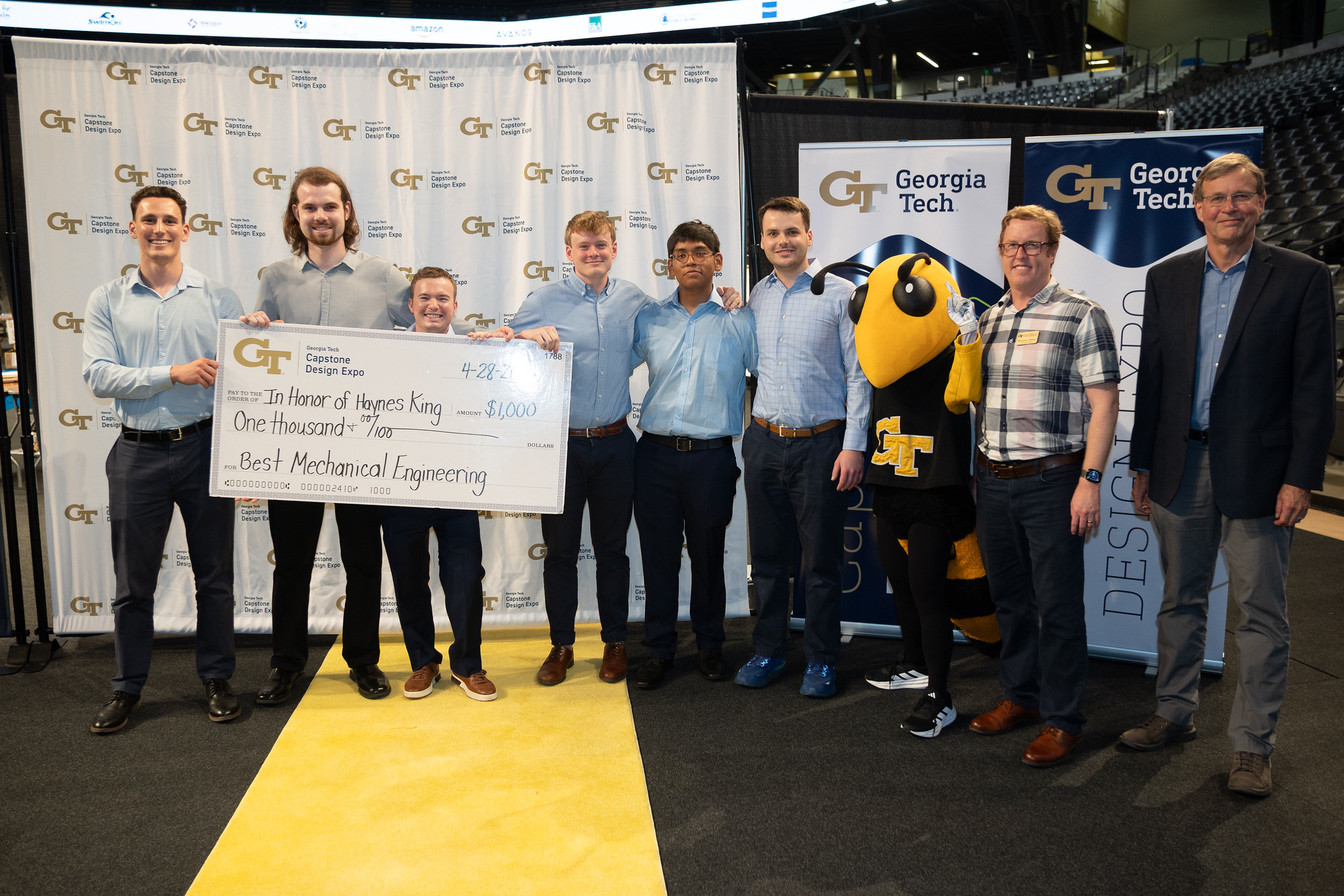
Team In Honor of Haynes King, composed of Woodruff School students Joseph Asto, Daniel Bailey, Matthew Bell, Andrei Khazatsky, Kuiper Roerdink, and Charles Whitener, took home the award for best mechanical engineering project. Sponsored by Rheem Manufacturing Company, the team addressed temperature stratification in water heaters.
“I was so glad we were able to get good results with the project,” Bell said. “It was a great night. Everyone who came by our table seemed to care about our work.”
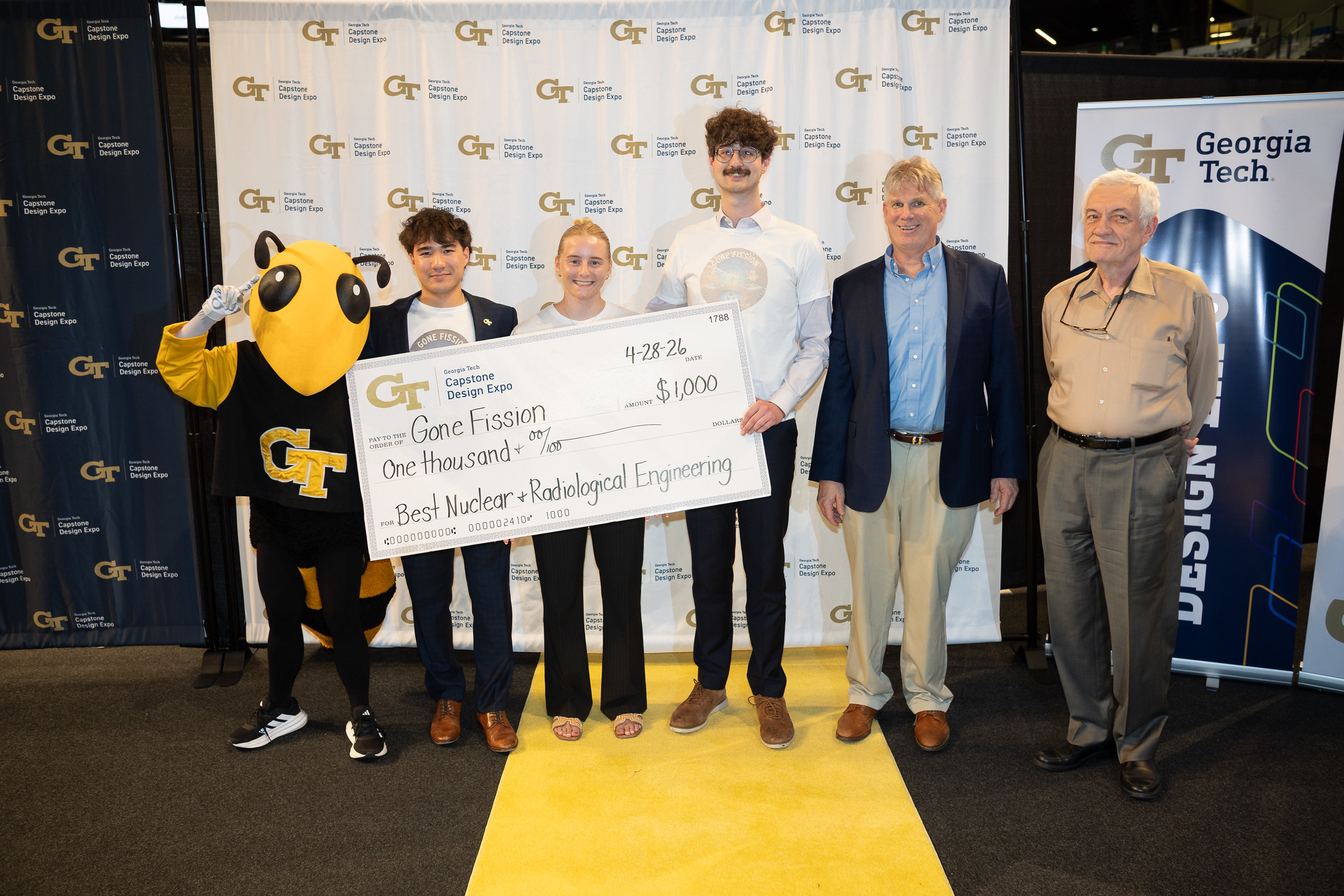
Nuclear and radiological engineering students Kendal Chunn, Colin Gold, and Derek Lewis, who made up team Gone Fission, won the best nuclear and radiological engineering project prize. Their project evaluated the design, safety, and economic feasibility of a deep-borehole pressurized water reactor, a novel nuclear microreactor concept designed to be deployed in a cased borehole approximately 1 mile underground.
“We worked really well as a team,” Lewis said. “My favorite part of this project was meeting with my team members every week and getting to the finish line.”
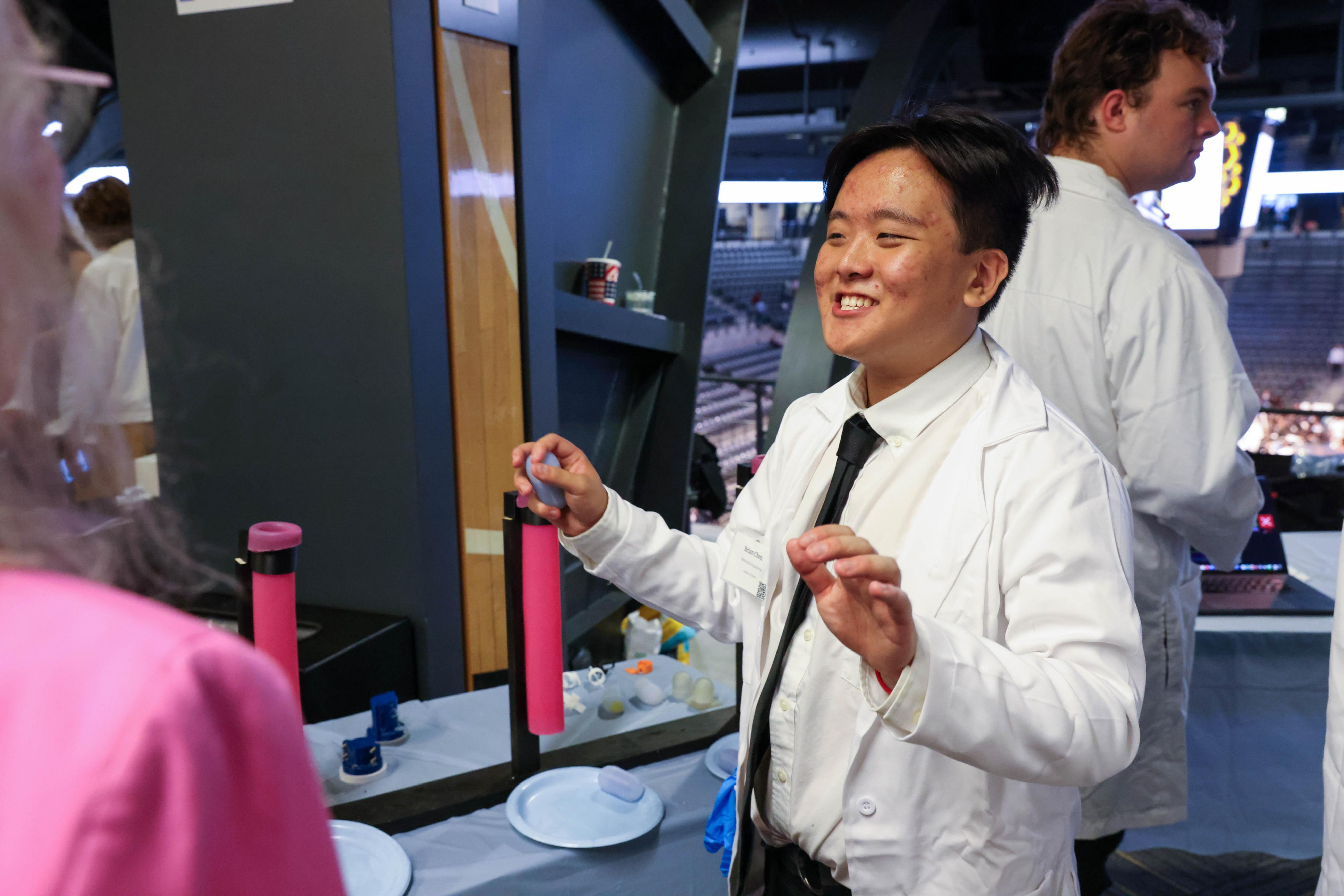
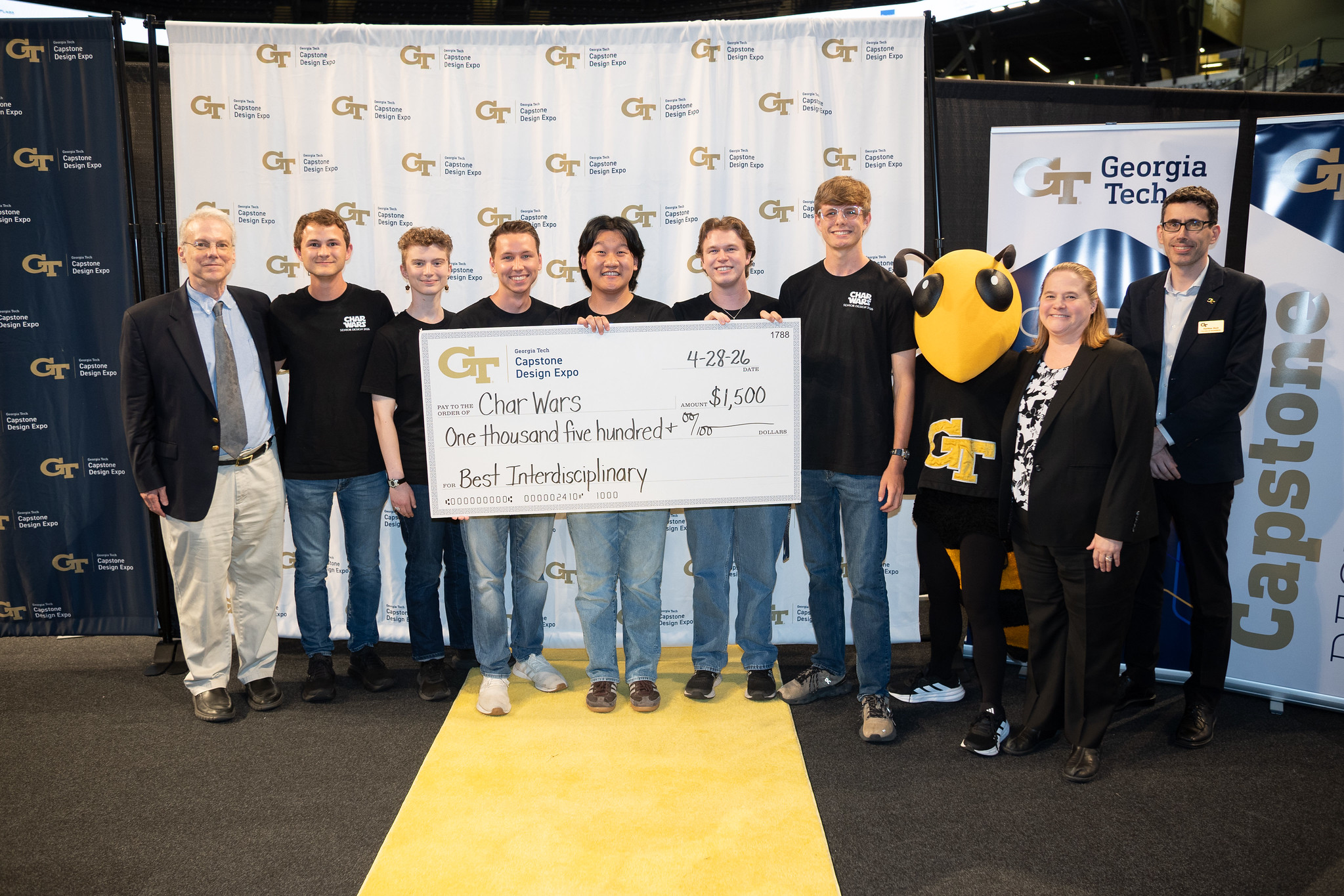
Mechanical engineering students Hunter Bennett, Blakely Daws, Jocelyn Heath, and Eli Scott were members of Char Wars, the winner of the best interdisciplinary project, along with biomedical engineer major Isaac Lecompte and computer engineer major William Moss. The team built on a previous capstone project that determined using a charcoal-like substance called biochar could be a promising way to filter arsenic out of drinking water in Guatemala. They conducted a series of experiments evaluating the material’s effectiveness and designed it to fit a common water filtration system used in the Central American country.
“It’s been really rewarding to work on this project,” said Daws. “It was great to work with the other majors and get their different perspectives.”
Scott added that it was rewarding to win after putting in months of work over the semester.
“It’s been a whole process, and it finally paid off,” he said.
A handful of interdisciplinary teams with mechanical engineering students also received honorable mention: Mini Mechanics, OpenForge, Rumbling Gamblers, Safety Innovations, and Sidewalk Sidekick.
The Spring 2026 Expo once again demonstrated the creativity and technical excellence of Woodruff School students as they prepare to enter industry, research, or graduate study.
The Capstone Design program is supported by philanthropic donations that are part of Transforming Tomorrow: The Campaign for Georgia Tech, a more than $2 billion comprehensive campaign designed to secure resources that will advance the Institute and its impact — on people’s lives, on the way we work together to create innovative solutions, and on our world — for decades to come.
See the Woodruff School’s Capstone Design Expo winners below and click here to view the photo gallery from the event.
Companies, entrepreneurs, and organizations interested in sponsoring projects in the Capstone Design class can contact Director of Design, Innovation and Experiential Learning Amit Jariwala. For more information on what projects are a good fit for the course, please review this brief YouTube video.
Some the content was adapted from the College of Engineering article, Protecting Organs, Water, and the Military Earn Top Honors at Capstone Expo.