
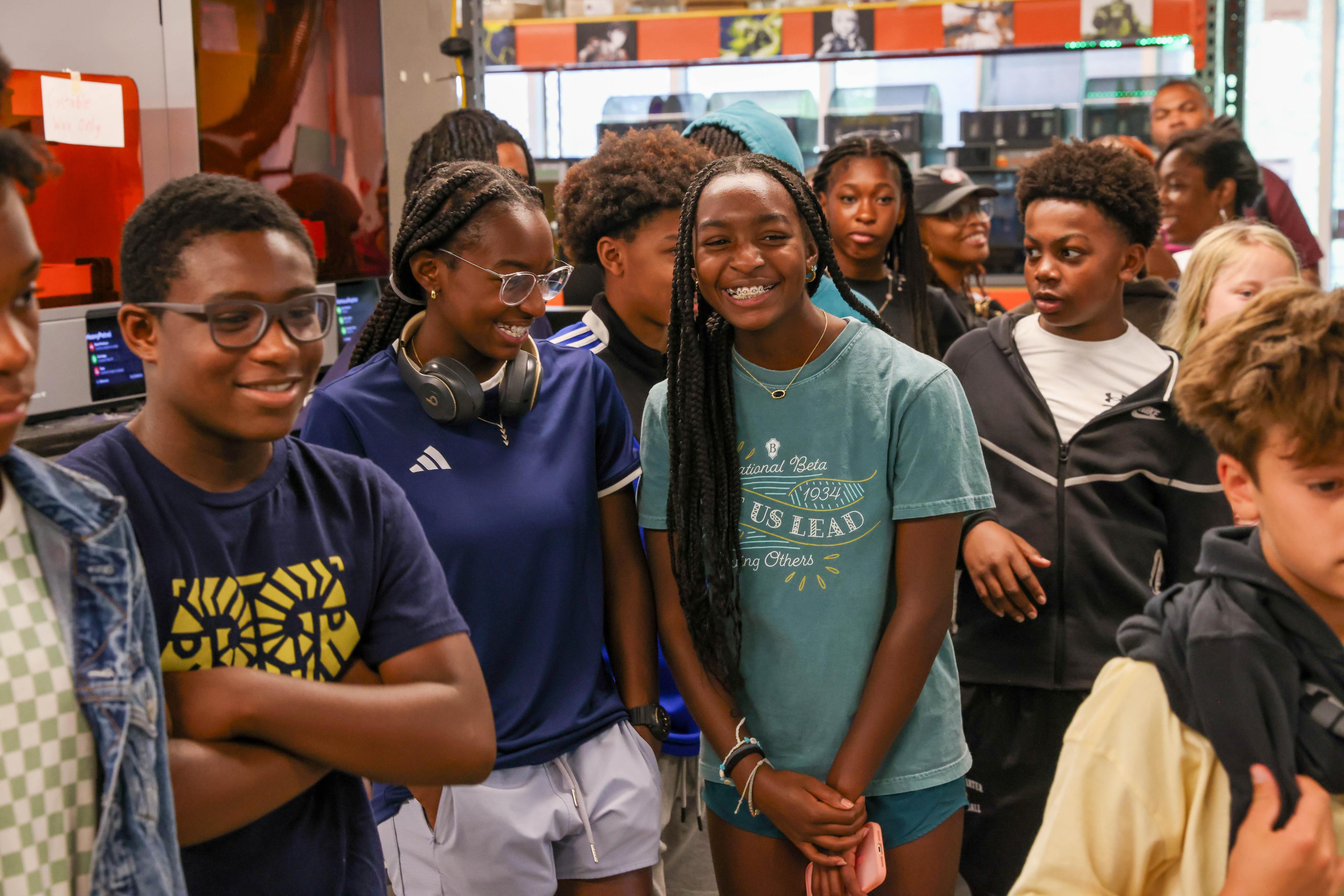
GT PRIME Helps Middle School Students Think Like Engineers
July 13, 2026
By Tracie Troha
Twenty-four middle school students spent June learning to think like engineers during GT PRIME, a STEM immersion and mentoring program hosted by the George W. Woodruff School of Mechanical Engineering.
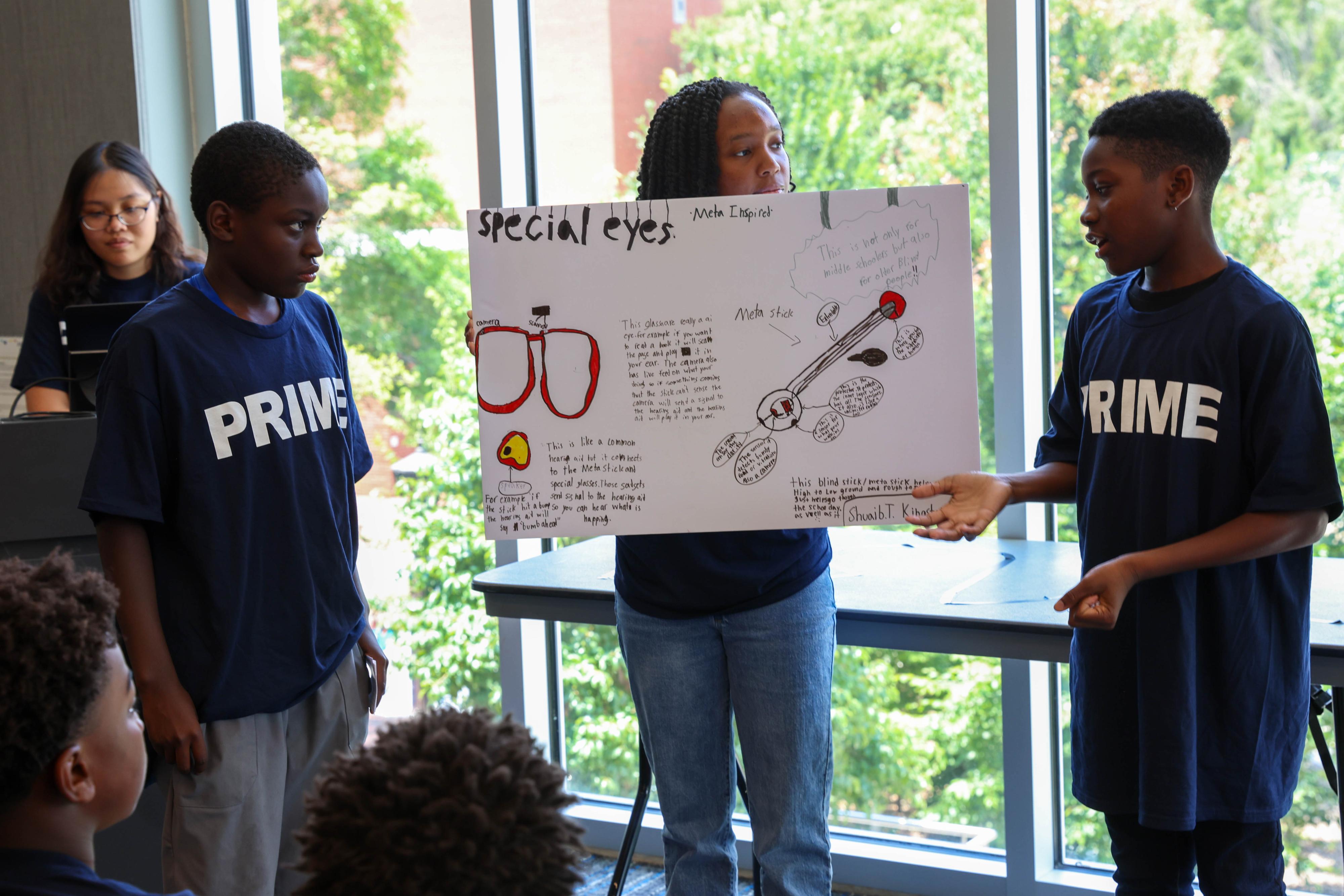
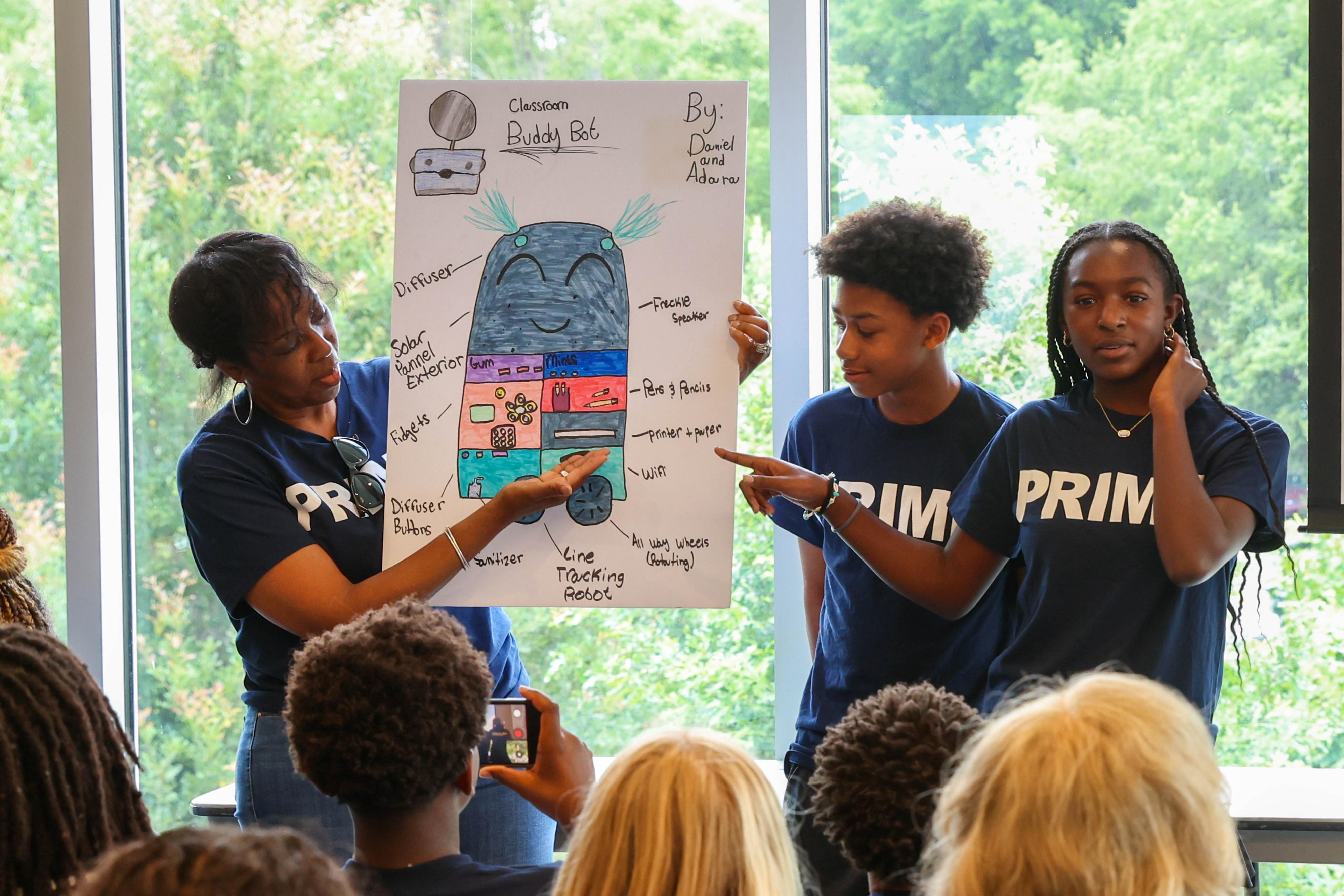
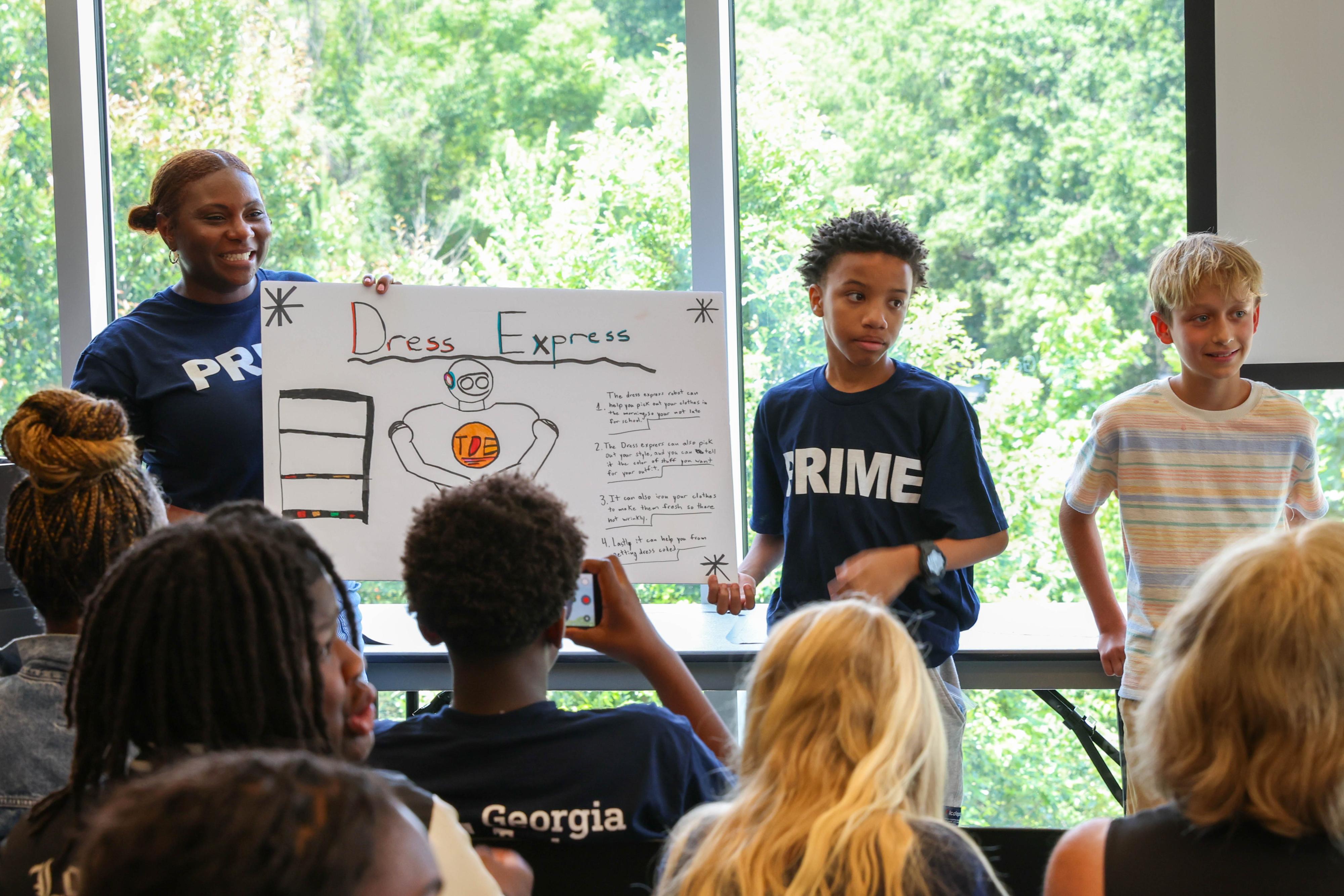
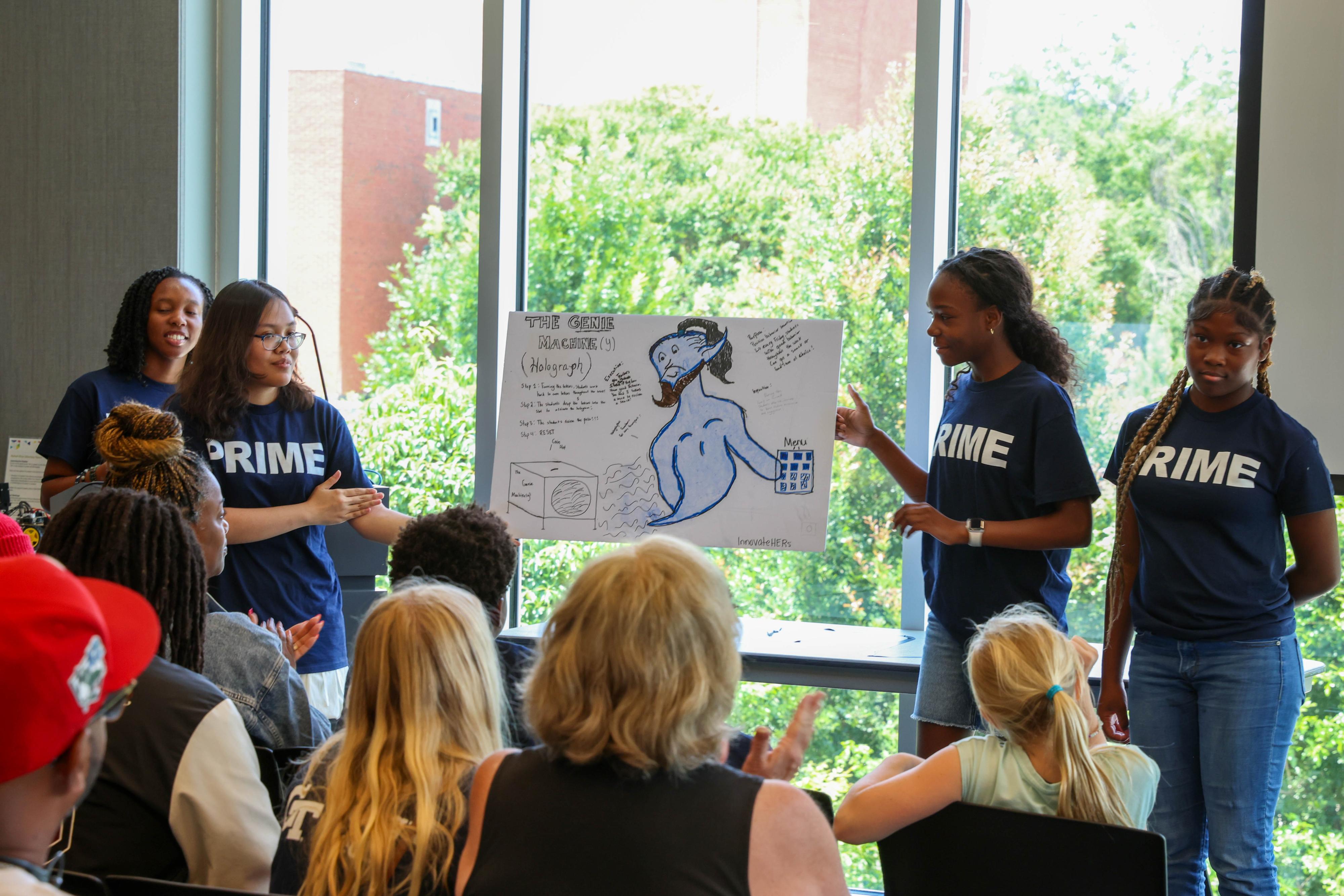
The program culminated June 26 with student presentations at the John Lewis Student Center, where teams proudly showed off their robot concepts to improve school life before an audience of parents, grandparents, and siblings.
Standing beside their posters, teams shared ideas for robots designed to do everything from helping students pick out outfits to distributing snacks. They eagerly explained their concepts, answered audience questions, and demonstrated the creativity and problem-solving skills they developed throughout the month.
Jonathan Gaines, associate chair for outreach and engagement, created GT PRIME in 2024 to introduce middle school students to engineering while also equipping school counselors with tools to support students interested in STEM.
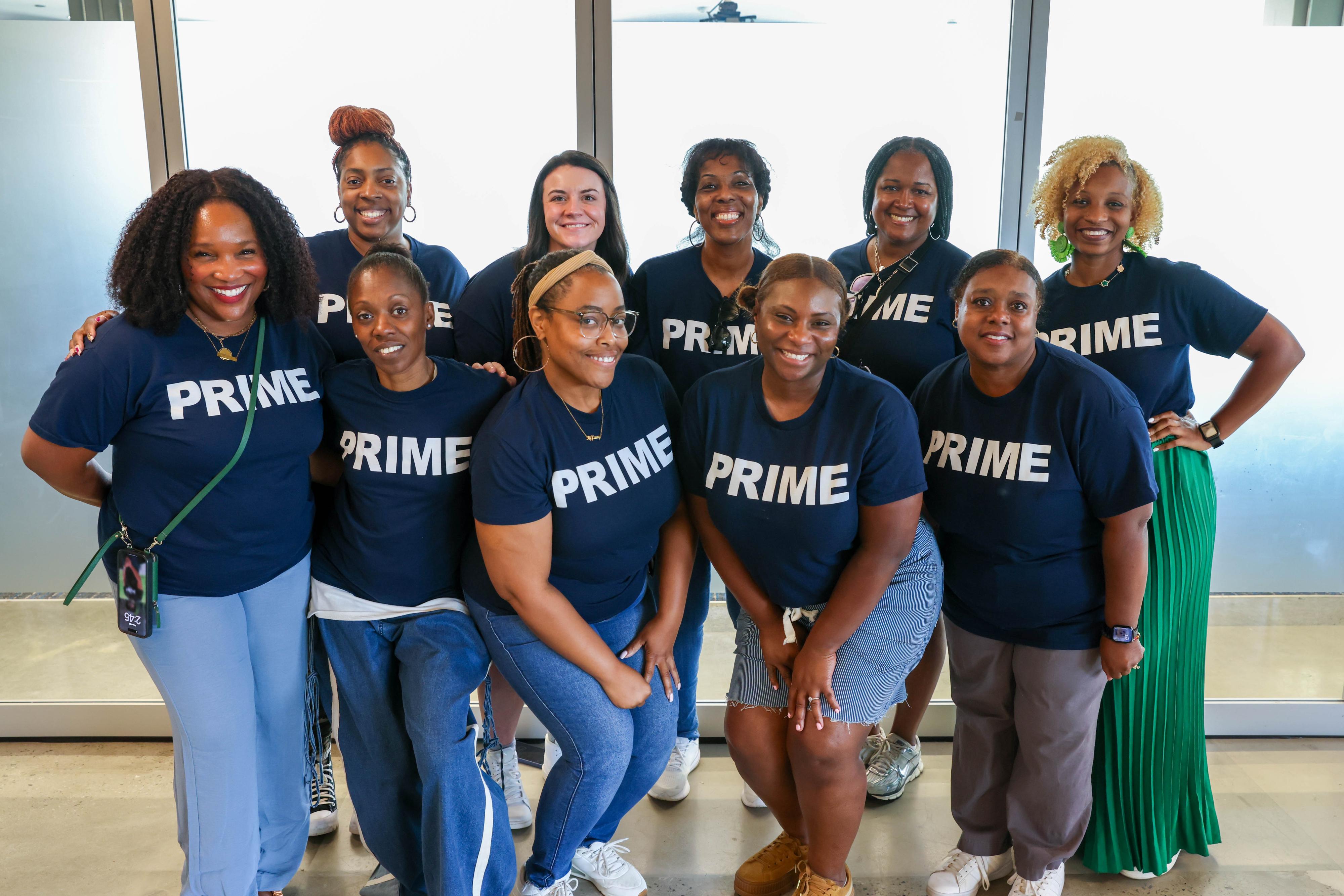
This year's program ran from June 2-30 and brought together students and 12 school counselors from Fulton County Schools and Atlanta Public Schools. The multiweek program began with counselor training focused on engineering, culturally responsive mentoring, and the program's core values before the students joined in the second week.
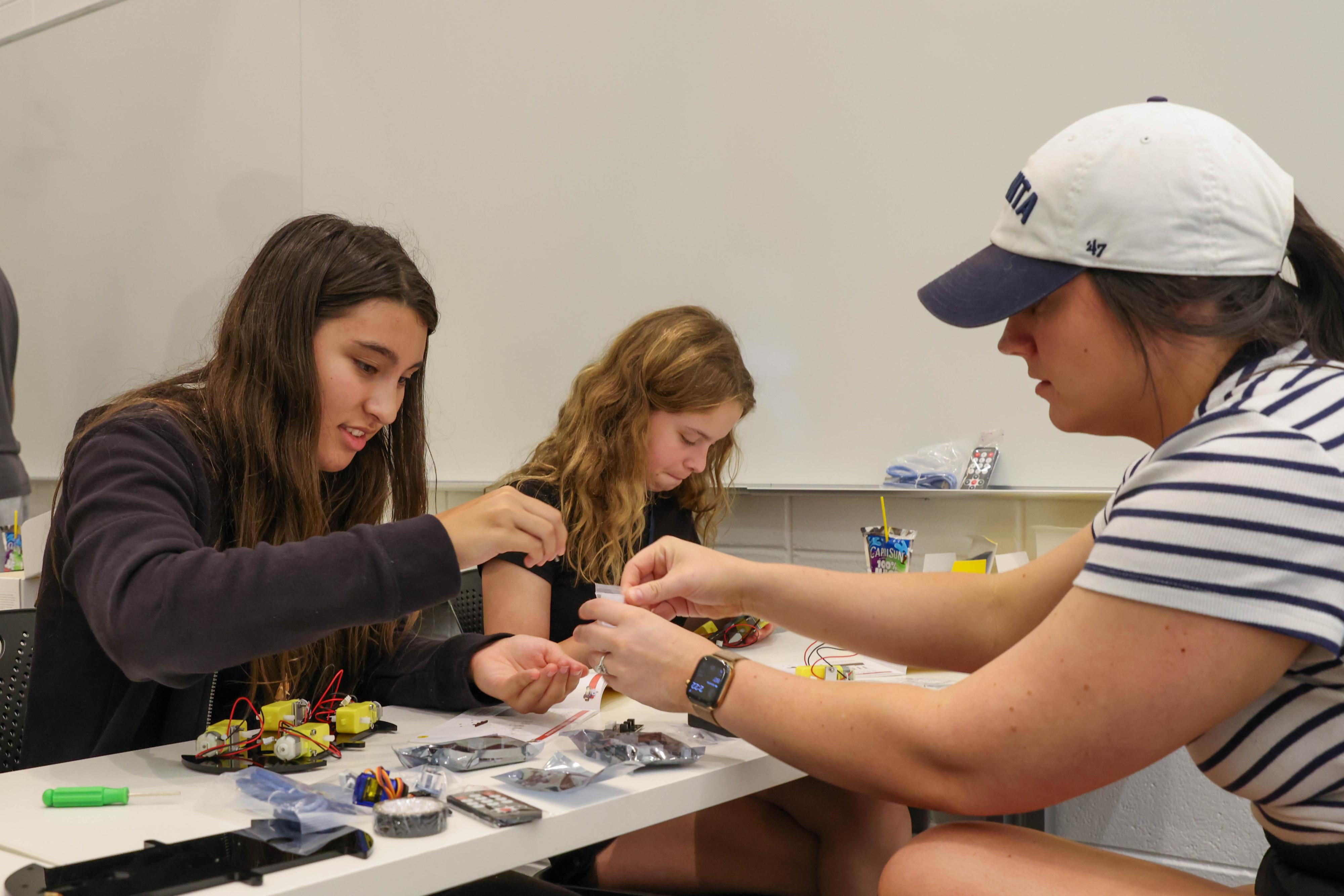
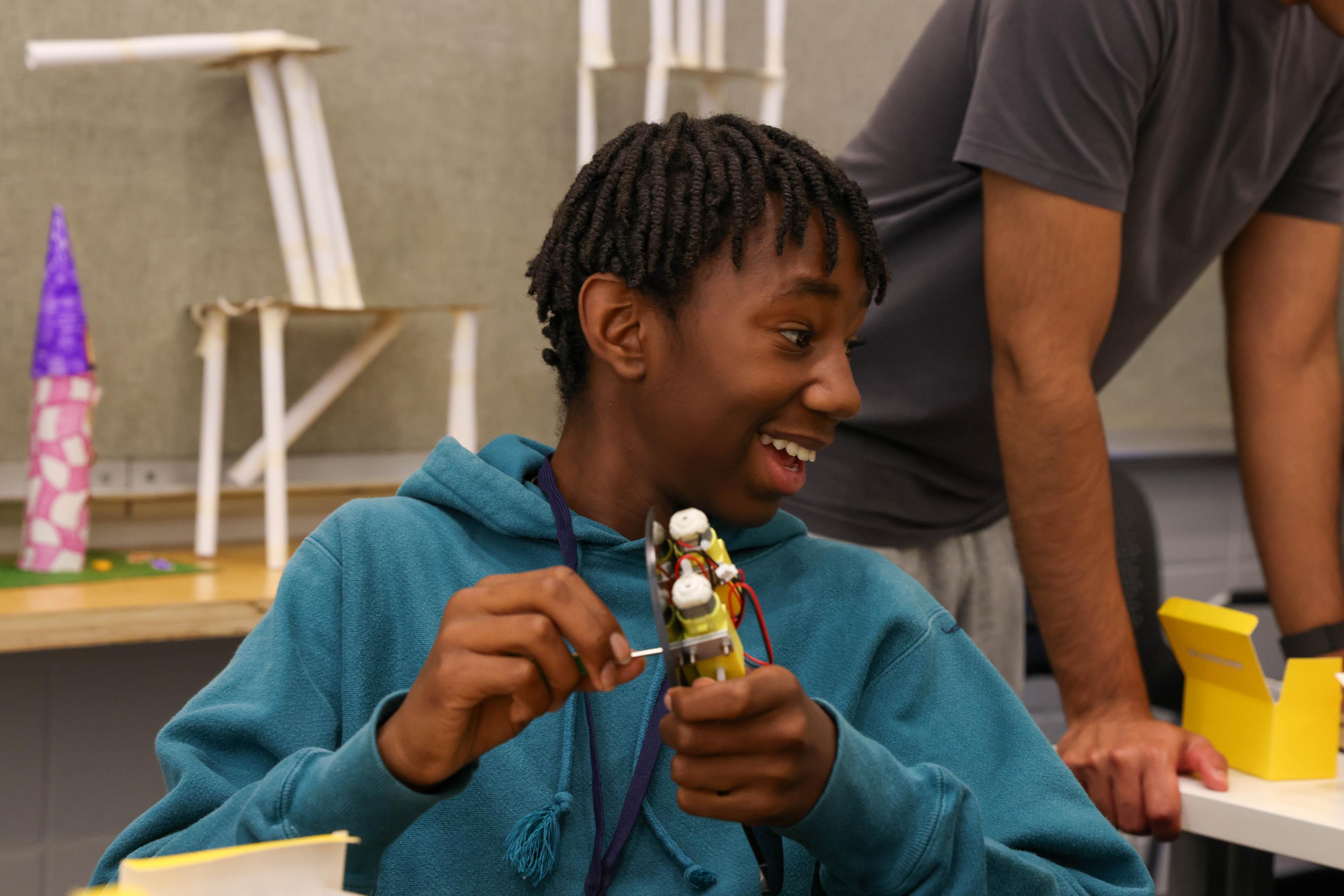
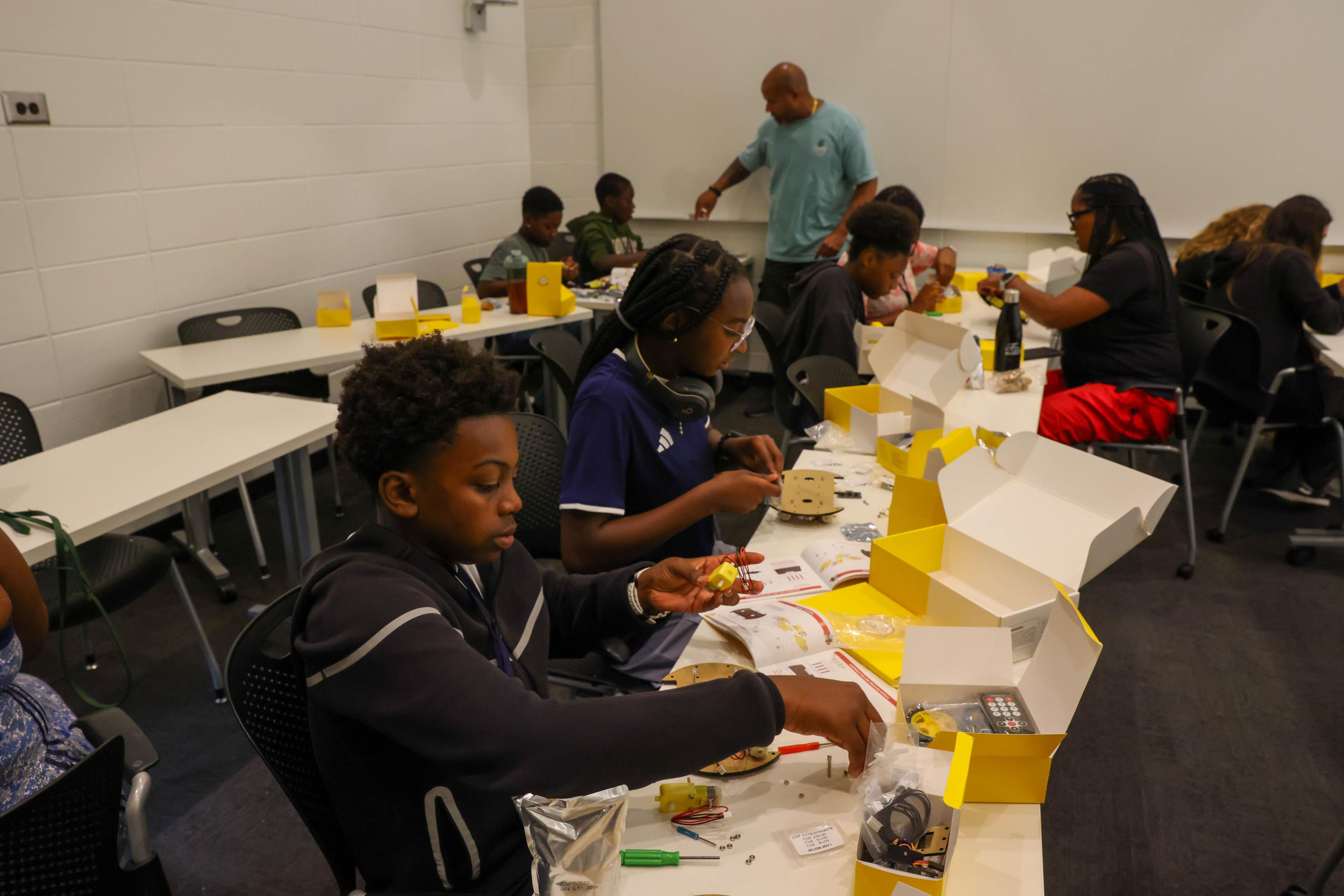
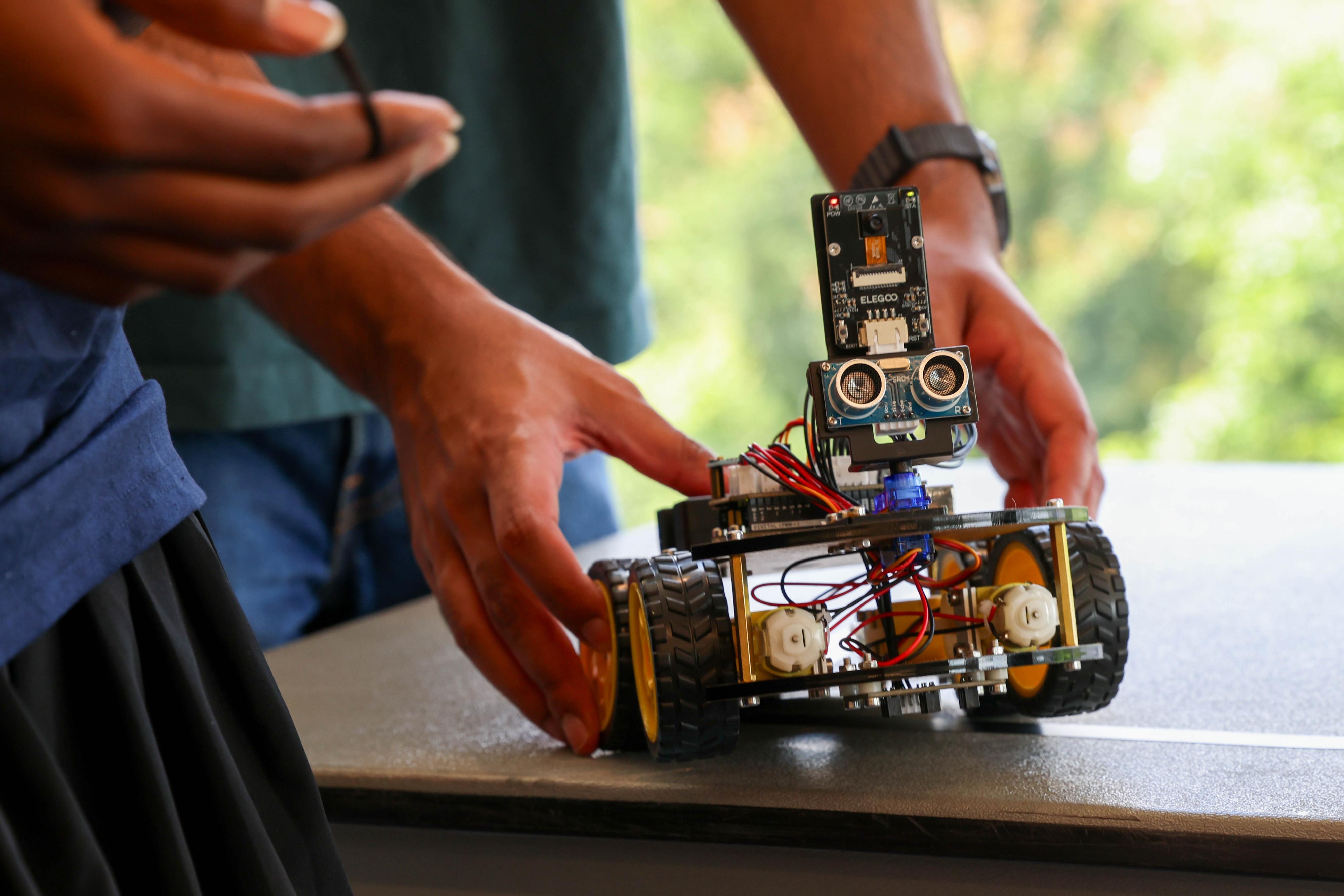
Throughout the program, students explored the engineering design process through hands-on challenges. They designed towers using limited materials, built bridges out of craft sticks capable of supporting a water bottle, tested and improved paper airplanes, and tackled an egg-drop challenge. They also built robots, competed in robot challenges, and toured the Flowers Invention Studio and the CRAB Lab.
GT PRIME Coordinator Abdullah Mustafa, a second-year mechanical engineering student, said participants learned a simplified version of the engineering design process built around three key steps: plan, act, and evaluate.
"We tried to get the point across that to build something, you first have to plan it," Mustafa said. "In all of our learning activities, we gave the students time to plan first, then build, and then evaluate their work and how they would improve it."
For many students, building robots was the highlight of the program.
"My favorite part of GT PRIME was getting to build the robots," said Logan Kelly, 13. "It was what I was most looking forward to before I attended."
Kelly, a returning participant, credited Mustafa with helping him grow throughout the program.
"Abdullah really helped me a lot," Kelly said. "He was really great, and I learned a lot."
While engineering concepts were central to GT PRIME, counselors also led social-emotional learning activities focused on positive affirmations, boundaries, self-awareness, and building interpersonal skills.
Counselor Victoria Klingel said the experience provided important exposure to engineering that many students may not otherwise encounter.
"GT PRIME was great exposure for students to get introduced to mechanical engineering," she said. "The program was all about exposure and experience."
For Mustafa, some of the program's biggest successes extended beyond technical skills.
"The aim of GT PRIME is not just to expose students to engineering, but also to build relationships," he said. "My hope is that the students learned a good amount of engineering and robotics but also gained valuable teamwork and communication skills."
He recalled one student who began the program shy and hesitant to participate but became one of the most engaged learners by the second week.
“She even ended up winning one of the competition categories and placing second in another,” he said.
By the end of the program, students left with certificates, new friendships, and the confidence to think like engineers.
(text and background only visible when logged in)