
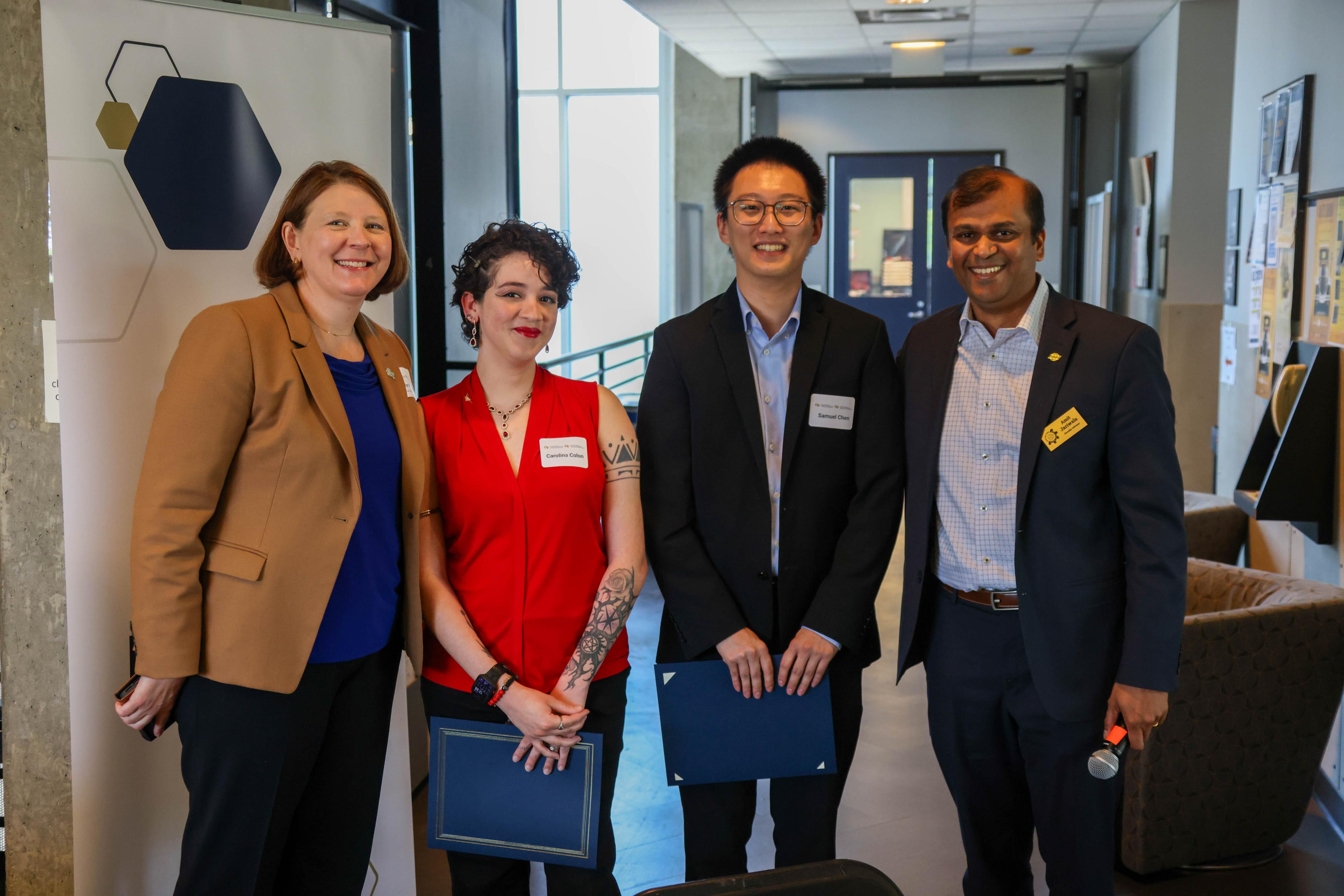
Pictured left to right: Carolyn Seepersad, Carolina Colón, Samuel Chen, and Amit Jariwala
TechMade Fellows, Ambassadors Reimagine Graduate Makerspaces
May 15, 2026
By Tracie Troha
Graduate students in the George W. Woodruff School of Mechanical Engineering were recognized this spring for reimagining how makerspaces can better support graduate education, research, and collaboration. Through a project-based competition tied to the Ph.D. teaching practicum class, students explored new models for graduate-centered makerspaces and earned honors as TechMade Graduate Makerspace Innovation Fellows and TechMade Graduate Makerspace Ambassadors.
Led by Andrei Fedorov, professor and associate chair for graduate studies and the Rae S. and Frank H. Neely Chair and Regents’ Entrepreneur, the competition challenged students to critically examine the role of makerspaces in graduate education and propose scalable, future-ready solutions. Teams investigated questions of why, how, when, and where makerspaces should be integrated into large graduate programs, with a focus on reducing access barriers, strengthening peer-to-peer learning, and increasing research productivity.
“Graduate education is unique in its apprenticeship focus of learning, but with an emerging emphasis on bridging disciplinary boundaries, it demands activating additional modes of knowledge synthesis,” Fedorov said. “Exploring the use of advanced technology makerspaces as the creative synthesis environment for graduate education was a topic for critical exploration by the teams of Ph.D. students in the teaching practicum class this spring.”
On Feb. 24, more than 10 teams presented their proposals, which extended beyond traditional fabrication labs. Concepts ranged from graduate-centered physical spaces with extended access and shared prototyping tools to computational and artificial intelligence (AI)-based makerspaces leveraging high-performance computing, as well as extended reality (XR) environments that allow students to safely explore complex or hazardous systems.
The TechMade steering committee named Samuel Chen, Carolina Colón, and Talia Thomas TechMade Graduate Makerspace Innovation Fellows. The award included certificates, Woodruff School souvenirs, lunch with the advisory board, and a $500 topping fellowship to be shared among the students.
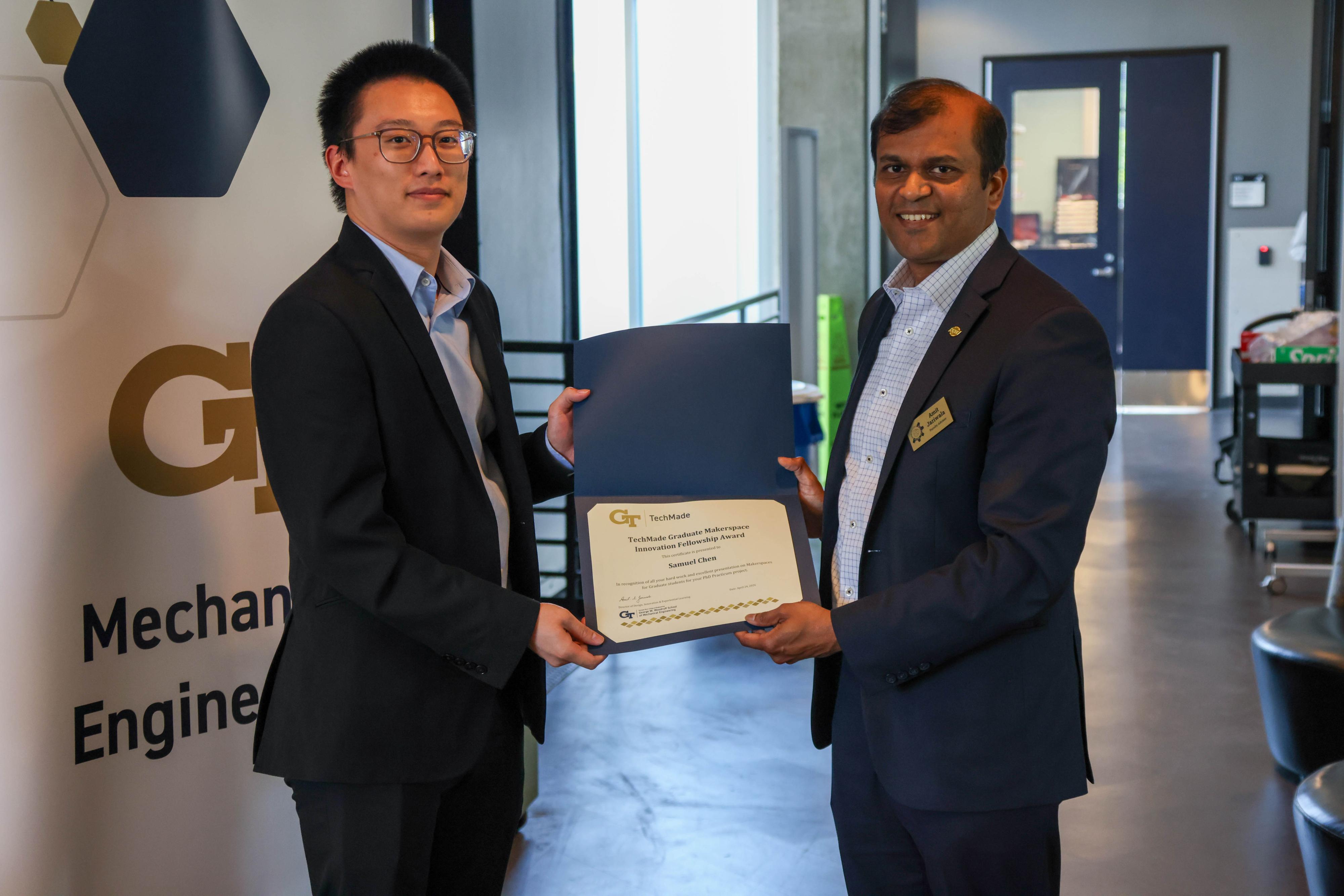
TechMade Graduate Makerspace Innovation Fellow Samuel Chen
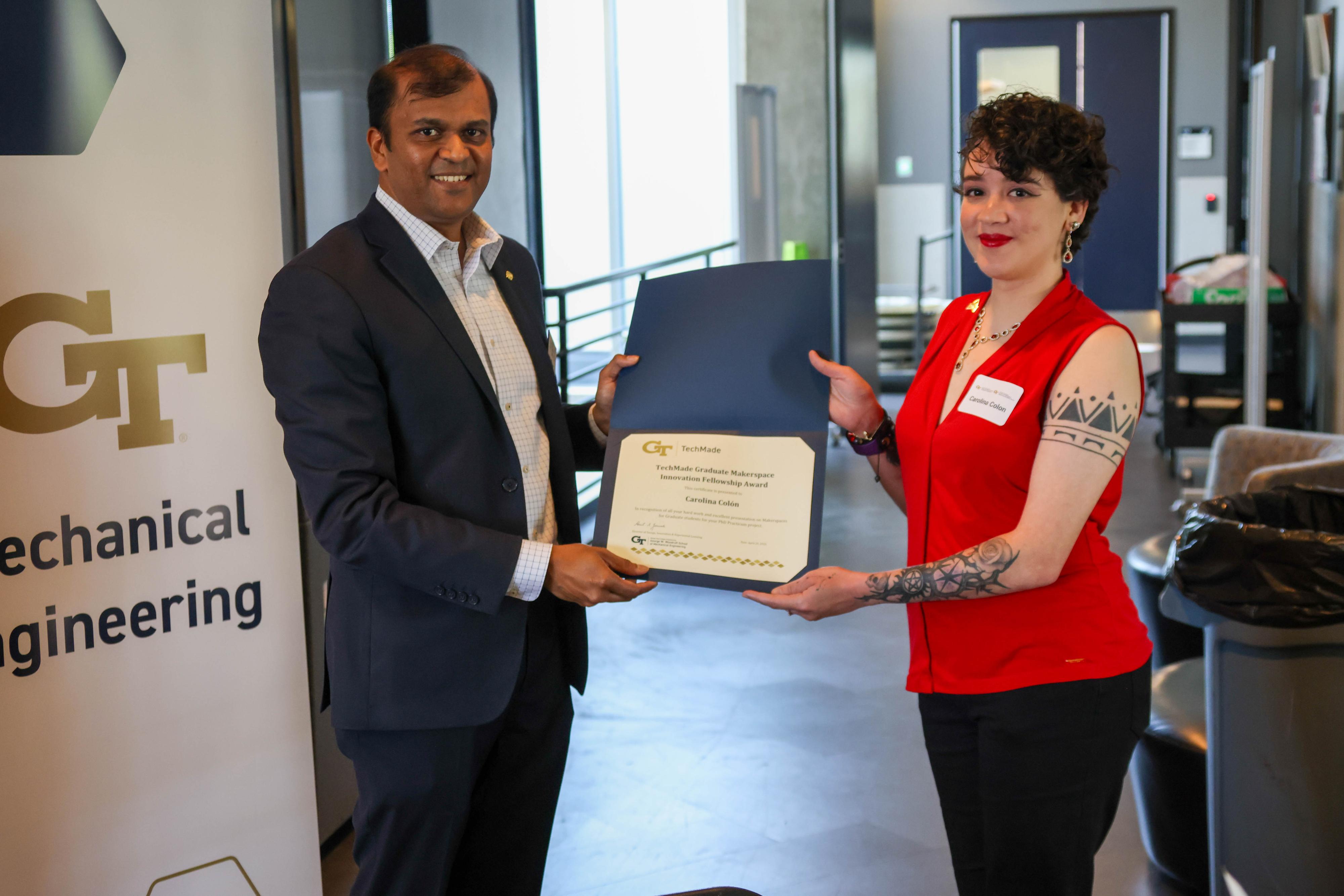
TechMade Graduate Makerspace Innovation Fellow Carolina Colón
Their proposal focused on redefining makerspaces around the needs of graduate students, particularly those navigating the learning curve of graduate research.
“We wanted to help define spaces that were built with the average graduate student in mind while also leveraging existing programs and infrastructure that further empower and support our peers,” said Thomas, a third-year Ph.D. student in mechanical engineering.
The team envisioned graduate students serving as subject-matter experts who could lead short, targeted crash courses that foster collaboration and shared ownership.
“The Ph.D. learning curve can be a beast,” Thomas said. “Sometimes you don’t know what you don’t know, and having a makerspace built to foster collaboration and judgment-free deep dives would greatly lower the barrier to entry for a lot of students.”
In addition to the Innovation Fellows, 13 students were recognized as TechMade Graduate Makerspace Ambassadors: Yang Chen, Shae Cole, Brian Epstein, Max Erpelding, Kaushik Godbole, Anthony Lim, Zihao Lin, Matt McCoy, Christian Molina-Mangual, Mayur Singh, James Wateska, and Guangxing Zhang.
For Singh, a fifth-year mechanical engineering Ph.D. student, his team's project focused on broadening the definition of a makerspace. Drawing on experience using Georgia Tech’s Partnership for an Advanced Computing Environment (PACE) high-performance computing resources, Singh and his team advocated for an AI-driven makerspace model that supports large-scale simulations and advanced data analysis.
“It can be difficult to communicate the usefulness of a makerspace that technically has no space,” Singh said. “We wanted to illustrate how the AI makerspace can help our peers with data analysis challenges and simulation needs.”
Singh said the project reinforced the importance of student leadership in making these resources visible.
“Without student stewardship, making these capabilities visible to the larger community is more difficult than it should be,” he said.
Cole, a fourth-year Ph.D. student in nuclear engineering, and his team explored how XR technologies could expand access for students in nuclear and radiological engineering and medical physics. Since many laboratory tools in these fields are expensive and accessible only in controlled settings, the team proposed using XR and modeling technologies to help students safely engage with complex concepts outside the lab.
“This allows them to visualize complex phenomena that cannot be observed with the naked eye, develop innovative solutions, and expand their understanding of this critical learning space,” Cole said.
Amit Jariwala, director of design, innovation, and experiential learning, said the proposals offered a strong foundation for future growth.
“We are proud to recognize our exceptional graduate student teams for their innovative proposals, which introduced new approaches to advancing research, collaboration, and skill development,” Jariwala said. “At TechMade, we are excited to build on these student-driven ideas as we work toward a more integrated and future-ready research ecosystem.”
Collectively, the projects highlight a shared vision of makerspaces as scalable research infrastructure that supports innovation, interdisciplinary problem-solving, and student success across graduate education.
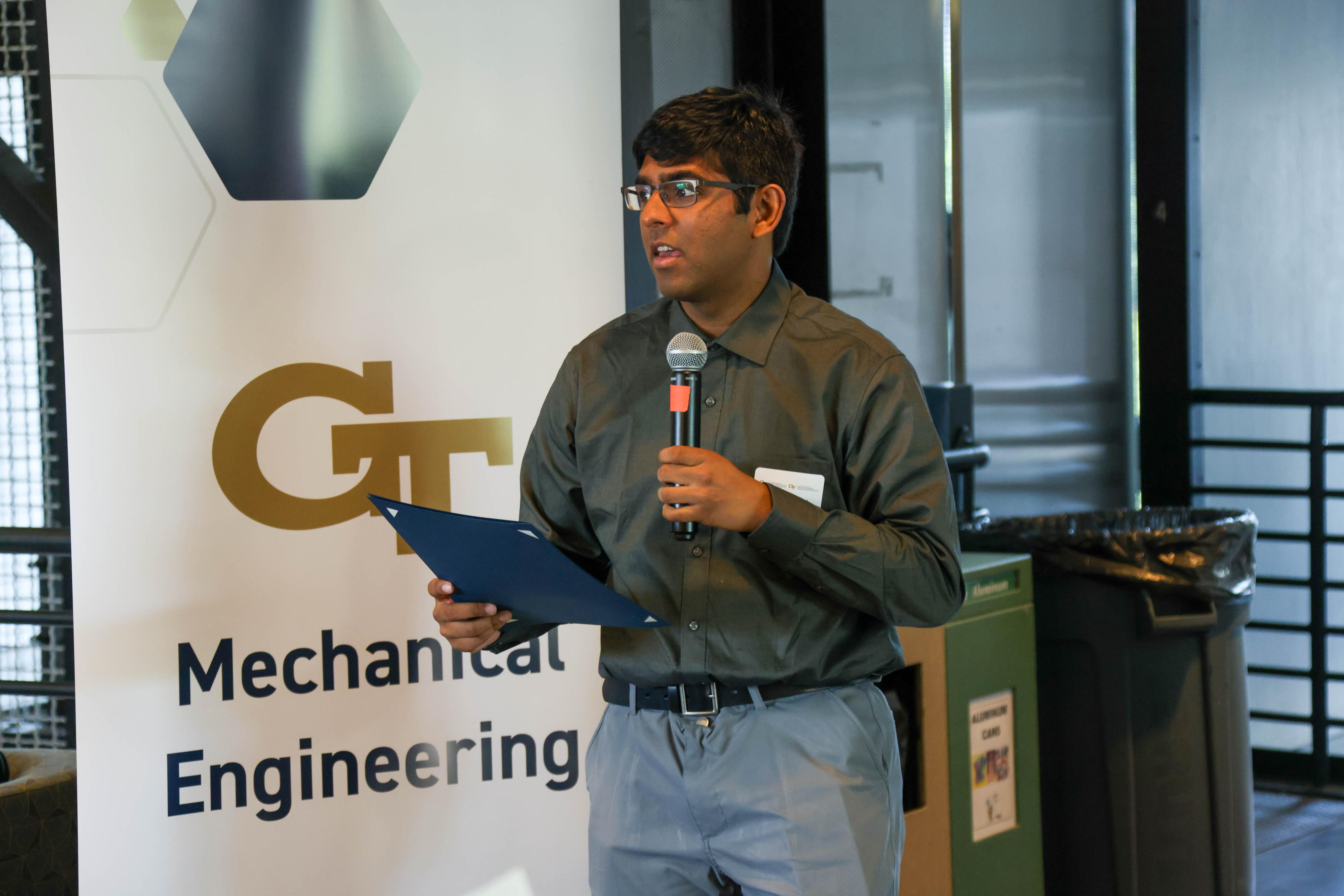
TechMade Graduate Makerspace Ambassador Mayur Singh
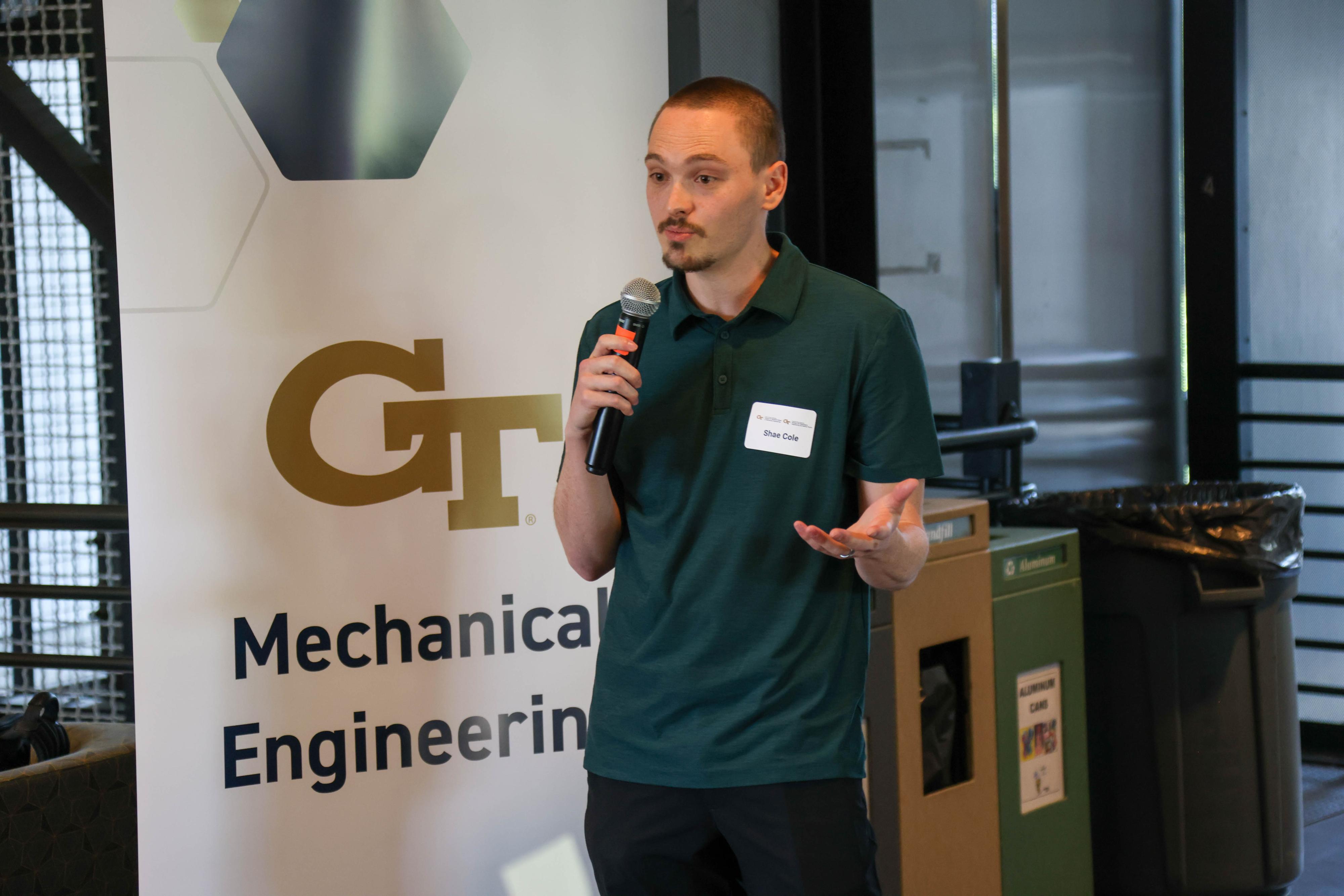
TechMade Graduate Makerspace Ambassador Shae Cole