April 29, 2026
By Tracie Troha
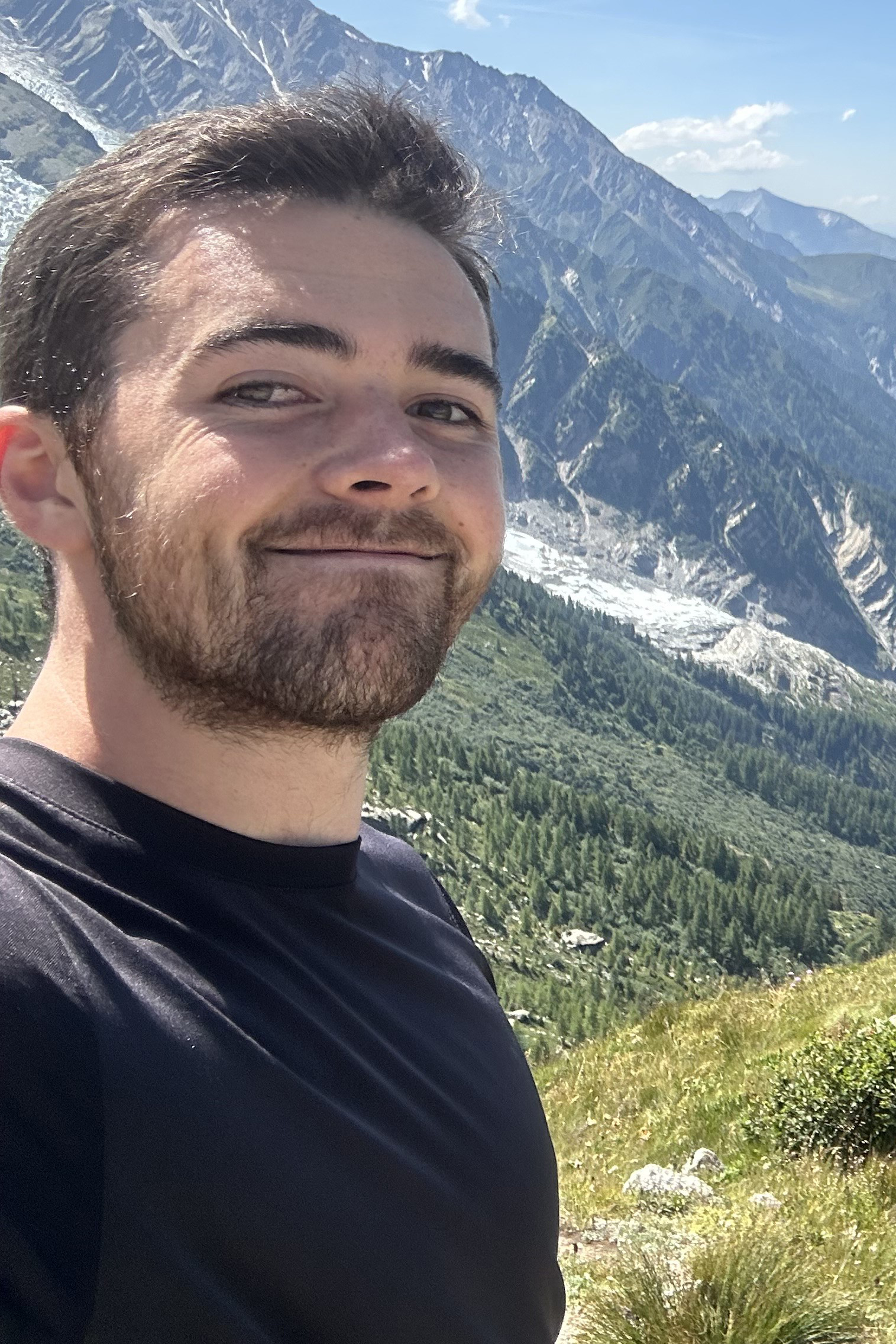
Johan Gouws didn’t set out to study nuclear and radiological engineering. But somewhere between his interest in physics and a list of possible majors, one field stood out and ultimately set the course for his academic journey from Johannesburg, South Africa, to Georgia Tech.
When Gouws was considering where to pursue his undergraduate degree, he cast a wide net. As an international student, he applied to several universities in the United States and abroad. But one school continued to stand out from the rest.
“When I was visiting a few schools, when I mentioned Georgia Tech, people would say, ‘That’s a really good school,’” he said.
Georgia Tech’s reputation, combined with strong academics, a welcoming environment, and even Georgia’s weather, helped seal the deal.
Now that he’s graduating in May with a bachelor’s degree in nuclear and radiological engineering and a minor in physics from the George W. Woodruff School of Mechanical Engineering, Gouws is preparing for his next step. He’s applying to graduate schools to continue exploring the field that once stood out to him on a list of majors.
A Leap into Nuclear Engineering
Gouws' interest in nuclear and radiological engineering began with a broader interest in physics.
“I really like physics, but I didn’t want to do a pure physics degree,” he said. “When I looked through the list of engineering degrees, nuclear engineering just kind of popped out.”
That initial interest quickly grew into a deeper academic focus, supported by the program’s tight-knit structure. With graduating classes of around a dozen students, Gouws found himself part of a close community where classmates quickly became familiar faces.
“By your second and third year, you really get to know everyone,” he said.
Learning Beyond the Classroom
While coursework laid the foundation, Gouws credits undergraduate research as one of the most impactful parts of his Georgia Tech experience.
Over the past few years, he has worked on multiple projects spanning a wide range of topics, from cybersecurity to radiation detection and nuclear reactor design.
One of his early projects involved scintillators, materials that emit light when exposed to radiation.
“It was something hands-on, which I really enjoyed,” he said.
He later explored simulation-based research, modeling new methods for detecting radiation and is currently working on a reactor design project using advanced analytical techniques.
These experiences helped him discover what aspects of nuclear engineering excite him most.
“It’s been good to try different things and figure out what I enjoy,” he said.
Gouws is also involved in transuranic research at the Laboratory for Advanced Nuclear Nonproliferation and Safety led by Woodruff Professor Anna Erickson, an experience that has further shaped his academic direction and may influence where he pursues graduate studies.
Building Something Real
For his Capstone Design Expo project, Gouws and his team took on a hands-on challenge of building a neutron generator.
Their device works by ionizing deuterium gas and accelerating it toward a target, where fusion reactions produce neutrons. One advantage of this approach, he said, is that it produces neutrons at one specific energy determined by the fusion reaction, while still allowing control over the timing of their emission.
The project came together through a collaboration with a faculty member and industry partner after earlier ideas proved too complex or costly.
“We really wanted to build something physical,” Gouws said. “That was important to us.”
Finding Community at Tech
Outside the lab, Gouws found community in a variety of ways. He participated in student organizations like the American Nuclear Society and explored interests such as rock climbing and tennis. But many of his closest connections came through shared experiences in classes and at campus jobs.
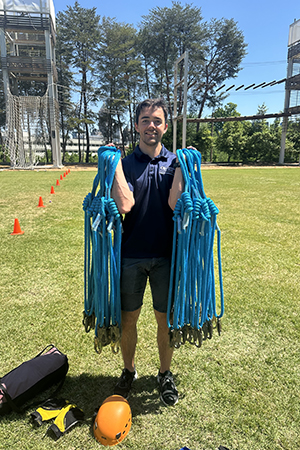
Since his second year, Gouws has worked at Georgia Tech’s Leadership Challenge Course, where he helps facilitate team-building activities for groups ranging from students to corporate teams.
“It’s a lot of teamwork exercises,” he said. “Groups come in to get to know each other or prepare for something big, and we guide them through different challenges.”
The role has introduced him to people from all walks of life and added a unique dimension to his college experience.
“It’s a fun job, and you meet a wide variety of people,” he said.
A Global Perspective
Living and studying far from home has also broadened Gouws’ perspective. From roommates to professors, he’s been surrounded by people from around the world.
“Meeting people from different backgrounds has been one of the most rewarding parts,” he said.
That global environment, combined with the rigor of Georgia Tech, has helped prepare him for what comes next.
Looking Ahead
After graduation, Gouws plans to pursue a doctorate in nuclear engineering, though he’s still deciding where his studies will take him and whether he’ll focus more on radiation detection or reactor design.
For now, he’s keeping an open mind.
“I’m just figuring out where to go next,” he said.
Advice for Future Students
Reflecting on his time at Tech, Gouws encourages incoming students, especially international students, to get involved early, particularly in undergraduate research.
“It’s harder to find internships in some fields because of security clearances,” he said. “So, getting involved in undergraduate research as early as possible is really important.”
He also emphasizes exploring interests early.
“You get a lot busier later on,” he said. “If you try different things at the start, it helps you figure out what you want to focus on.”
From taking a chance on an unfamiliar major to building advanced nuclear systems, Gouws’ journey at Georgia Tech has been one of exploration, growth, and discovery. As he prepares for graduate school, he carries forward not just technical knowledge, but a global perspective and a strong sense of direction.