

AI-Powered Ultrasound Research Expands Possibilities for Treating and Monitoring Brain Disease
January 9, 2026
By Tracie Troha
A study led by Associate Professor Costas Arvanitis takes a major step toward safer and more effective treatment and diagnosis of brain diseases. His team’s research, published in Advanced Science, shows how combining artificial intelligence (AI) with focused ultrasound can safely deliver therapies and improve diagnostic interventions to the brain.
The study addresses one of medicine’s toughest challenges: the blood-brain barrier (BBB). The BBB is a thin, microscopic interface that protects the brain but also blocks most drugs and diagnostic molecules. This makes treating and monitoring brain tumors and neurological diseases extremely difficult.
Strategies to safely and effectively overcome the BBB are critical for the diagnosis, treatment, and monitoring of central nervous system diseases.
Teaching Ultrasound System to Predict Risk
Focused ultrasound combined with microscopic gas-filled bubbles can temporarily open the BBB. When carefully controlled, the technique allows drugs to enter the brain and enables microscopic molecular reporters from tumors and brain diseases to exit into the blood.
The difficulty lies in control. Too little ultrasound has little effect; too much can cause the microbubbles to collapse, increasing the risk of tissue damage.
In their study, Arvanitis, who is jointly appointed in the George W. Woodruff School of Mechanical Engineering and the Wallace H. Coulter Department of Biomedical Engineering, and his collaborators developed a machine learning–assisted, closed-loop ultrasound system that continuously listens to acoustic signals generated by the microbubbles during treatment. Unlike current systems that typically respond only after harmful bubble collapse has occurred (reactive systems), the AI-driven system anticipates danger before it happens and adjusts the ultrasound settings in real-time to keep the treatment within a safe range (proactive system).
“It hears the rumble before the engines tumble. Rather than waiting for trouble, it anticipates it,” said Hohyun “Henry” Lee, a co-author of the paper and a postdoctoral fellow in the Woodruff School.
The researchers trained the machine learning model on more than 54,000 acoustic datasets collected during ultrasound experiments, allowing the system to recognize subtle acoustic patterns that precede harmful microbubble behavior.
“This widens the treatment window, meaning that treatments are more consistent as the system recognizes the sweet spot when it's safe to enhance bubble stimulation,” Lee said. “As a result, there are reduced chances of side effects and improved opening of the BBB.”
Implications for Drug Delivery and Liquid Biopsies
By safely widening that window, the technology makes it possible to deliver therapies into the brain and detect brain disease through a blood test.
“Because the system can open the blood–brain barrier more effectively and safely, it becomes possible to deliver larger or next-generation therapies, such as gene-based treatments that are typically carried by large nanocarriers and cannot otherwise reach the brain, or that require exposure levels that are too risky,” said Victor Menezes, a co-author of the paper and bioengineering Ph.D. student in the Woodruff School.
The approach also enables tiny disease markers from the brain to enter the bloodstream, making blood-based detection and monitoring of brain cancer feasible and more reliable.
“This highlights the potential to turn the BBB from a barrier into a diagnostic and treatment monitoring gateway,” he said.
Looking Ahead
The researchers demonstrated that the approach scaled successfully from mice to rats, which is an important step toward eventual clinical use. Because the system is flexible and data-driven, it could be integrated into existing focused ultrasound platforms and adapted for individual patients.
“This is very important work and will certainly fuel the future of focused ultrasound in the clinic,” said Dr. Graeme Woodworth, chair of neurosurgery at the University of Maryland and a co-author of the paper.
Woodworth is a pioneer in translating focused ultrasound technology to the clinic.
Looking ahead, Arvanitis said the technology could reshape how clinicians treat and monitor brain disease. Clinicians may eventually be able to verify treatment effects without relying on an MRI, leading to shorter, less costly, and more accessible outpatient visits.
The next steps focus on adapting and validating the system for human use.
“These results establish key design principles for AI-driven focused ultrasound systems with broad implications for microbubble-assisted therapies,” Arvanitis said. “Machine learning also revealed previously underappreciated patterns in how microbubbles behave in brain tumors, opening new possibilities for basic and applied research and paving the way for safer, smarter focused ultrasound therapies through data-driven treatment calibration.”
His team is currently exploring alternative machine-learning architectures to continue improving performance and generalization of their approach.
The research was supported by the National Institutes of Health and the Focused Ultrasound Foundation. Arvanitis’s team included graduate students from his lab and researchers from the University of Maryland, John Hopkins University, and Emory University.
Citation: Hohyun Lee, Victor Menezes, Shiqin Zeng, Chulyong Kim, Cynthia M. Baseman, Jae Hyun Kim, Samhita Padmanabhan, Pranav Premdas, Naima Djeddar, Anton Bryksin, Nikhil Pandey, Pavlos Anastasiadis, Anthony J. Kim, Tobey J. MacDonald, Chetan Bettegowda, Graeme F. Woodworth, Felix J. Herrmann, and Costas Arvanitis. “Data-Driven Feedback Identifies Focused Ultrasound Exposure Regimens for Improved Nanotheranostic Targeting of the Brain.” Advanced Science.
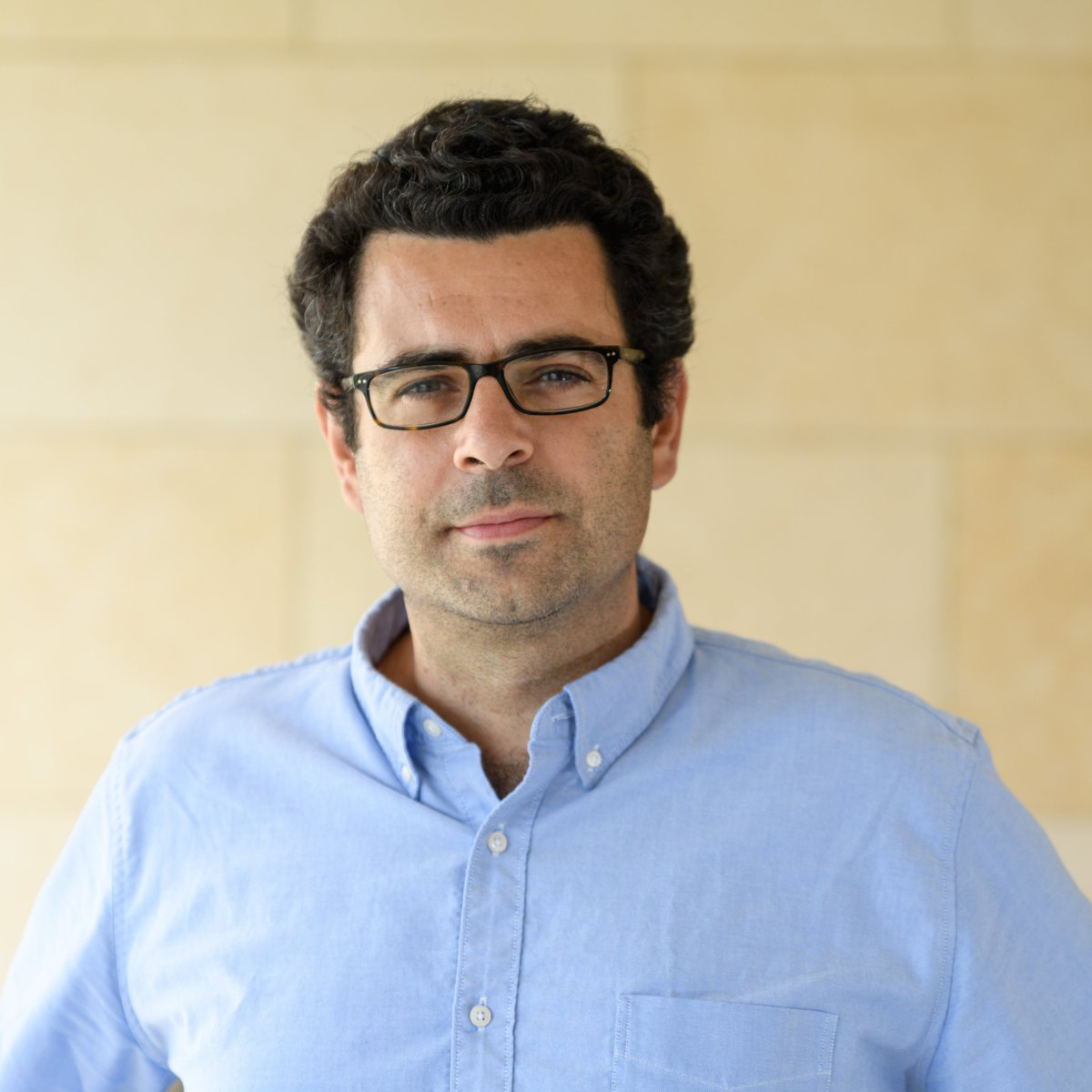
Associate Professor Costas Arvanitis
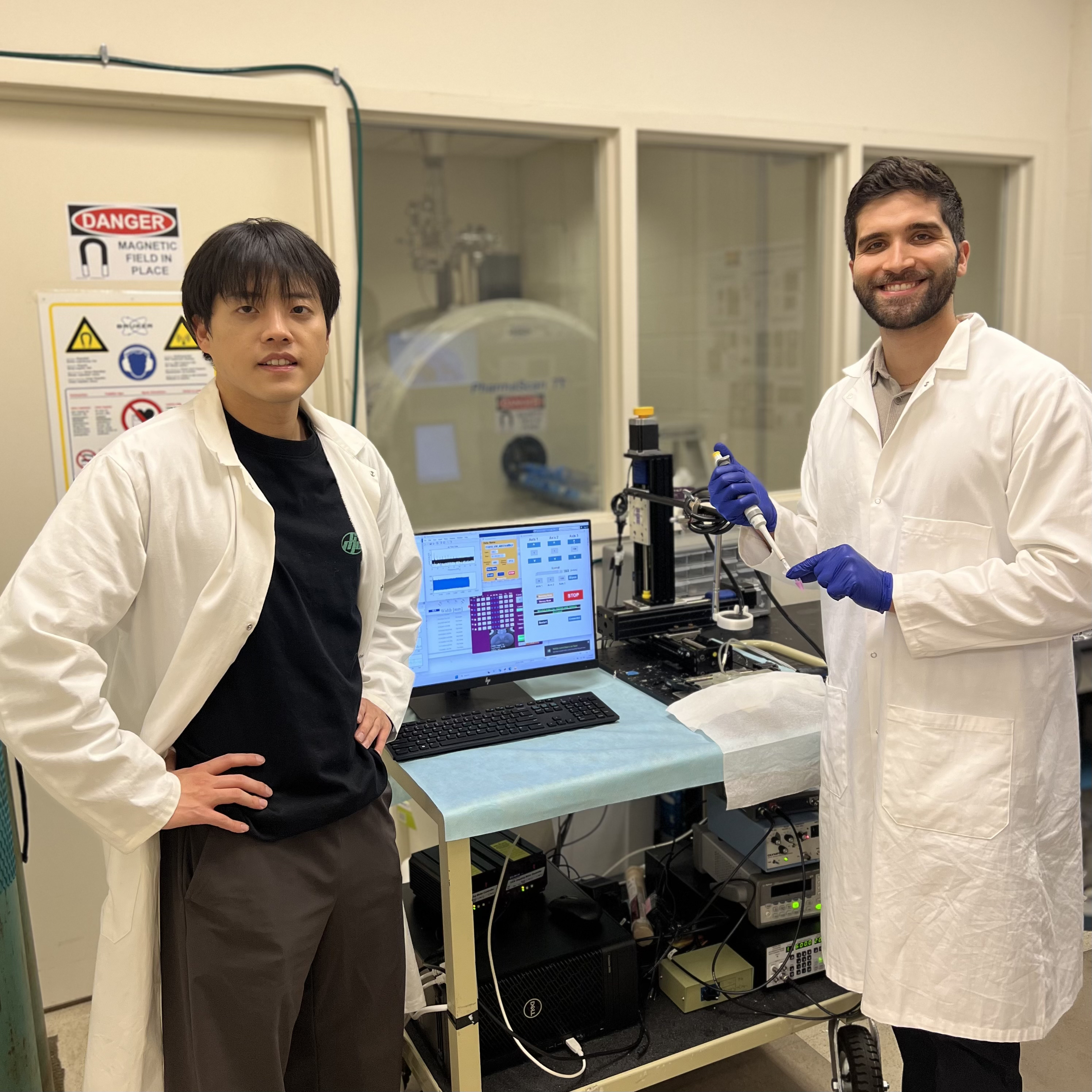
Pictured left to right: Hohyun “Henry” Lee and Victor Menezes